segunda-feira, 13 de fevereiro de 2012

Why Jerusalem is “Holy” for the Muslims

The question that confronts us today is whether Judaism and Christianity will submit to the Islamic religious narrative, which invalidates Judaism and Christianity, and appropriates their holiness, their prophets and their "founding fathers" unto itself.
MUGHRABI BRIDGE

“And This is the Gate of Heaven” (Genesis 28:17)

These days, Jerusalem has returned to the headlines in the Middle East because of the plan to build a pedestrian bridge to the “Mughrabi” Gate of the Temple Mount. Many bridges have been built in Israel without arousing even one word of criticism in the Arab or Islamic world, but if Israel comes anywhere near the Temple Mount – whether it be for the tunnels or archaeological digs – the speakers of the Arab and Islamic world immediately jump to their feet and scream bitterly. Why?

Jerusalem, at least the Old City and the Temple Mount, has been a Palestinian political demand ever since it was liberated from the illegitimate Jordanian occupation in June 1967, despite the fact that it was never the capital of anything throughout Islamic history, and was not even the regional capital of Palestine after the Muslim Conquest in 627 CE. The capital was Ramle, 30 kilometers to the west from Jerusalem. And so, we ask: Why is Jerusalem holy to a religion that was established and developed in the Arabian desert, today’s Saudi Arabia? How did Jerusalem win the status of “the third holiest site in Islam” despite the fact that it does not appear even once in the Qur’an? Why, did only Sunni Muslims, traditionally, consider Jerusalem as a holy city while Shi’is do not?

To understand why this is so, we must trace the evolution of the idea of the holiness of Jerusalem in Islam. According to the Qur’an (Chapter 25, Verse 5) the prophet of Islam, Muhammad, was harshly criticized by the members of his tribe in Mecca for bringing them a religion which was nothing but “Asatir al-Awwalin” (the legends of the precursors), meaning the religious narrative of the Jews and the Christians, because many of the stories that appear in the Qur’an are copies of stories from the Bible. Apparently Muhammad learned these stories from his very close friend, a Jewish Rabbi from Yemen named Ka’b. The criticism of Islam, as a copy of other religions made Islam appear illegitimate, so in order to get a “seal of approval” Muhammad tried to convert three Jewish tribes who lived in a desert oasis called “Khaybar”, which was situated near the city of al-Medina. To please them, Muhammad legislated that the direction of prayer for Muslims was determined to be Northward, towards Jerusalem, for some 16 months. But the Jews remained loyal to Judaism and did not embrace Islam and therefore Muhammad waged war against them, slaughtered the men and took the women, including Safiyya, the daughter of one of the tribal heads, whom he took as a wife. After he eliminated these Jewish tribes, he was no longer interested in their direction of prayer, so he abandoned Jerusalem and turned the direction of prayer Southward, towards the city of Mecca. He later conquered Mecca, burned the idols that were within, and consecrated the city.

In those days Muhammad had a group of supporters in the city of al-Ta’if, which was located at a distance of a two-day walk from Mecca. When Muhammad walked to Ta’if and back he would spend the night in the village of “al-Gi’irrana”, and Islamic tradition has it that near the village were two mosques, “The Nearby Mosque” (“al-Masjid al-adna”) and the “Distant Mosque”, (“al-Masjid al-Aqsa”), and that he would pray in one of them before setting out on his day-long journey, either to Ta’if or back to Mecca. The Qur’an (Chapter 17, Verse 1) tells a story that one night a miracle occurred to Muhammad; the Creator took him to the Distant Mosque in order to show him His miracles. The people of that generation understood this passage literally, because they knew that “al-Masjid al-Aqsa” was near the village on the way to Ta’if. Muhammad died in the year 632, without ever having visited Jerusalem.

Five years after Muhammad’s death, Jerusalem was conquered without a battle, when Bishop Sophronius opened its gates to the formidable army of the second Caliph, ‘Umar bin al-Khattab. Sophronius took the caliph and his entourage for a tour of the city, and included in his entourage was Ka’b, Muhammad’s Jewish companion. When they arrived at the entrance to the Temple Mount Ka’b removed his shoes, apparently because of the passage “remove your shoes from your feet” because the place was holy. Caliph ‘Umar saw this and asked him the meaning of his actions, and Ka’b answered that it was because of the holiness of the place. Caliph ‘Umar became angry with him, scolded him and accused Ka’b for trying to insert Jewish concepts into Islam, and insisted that he put his shoes back on immediately because the place was not holy at all. The great Islamic historian, al-Tabari, tells this anecdote and we can derive from it the interpretation that Jerusalem in the year 627 CE – even though it was under Muslim occupation – was not considered by them to be a holy place.

Thirty years after the death of Muhammad, the Umayyad Caliphs transferred the capital of the Muslim Empire from the Hijaz to Damascus, incurring the wrath of the Meccans who were loyal to Muhammad and his legacy. In the following generation, because of the looting, plundering and booty that the Muslims perpetrated upon the empires of Persia, Byzantium and many other places, Damascus became a city of wealth, permissiveness, gala celebrations, debauchery and drunkenness, and there was no abomination that the people of Damascus left untouched. It’s low moral status caused the people of Mecca who were faithful to the legacy of Muhammad, to declare the residents of Damascus to be heretics. Finally, in the year 682, under the command of Abdallah bin al-Zubayr, the Meccans organized and rebelled against the Caliph, and prevented the residents of Damascus from coming to Mecca for the Hajj pilgrimage.

There are those who see a relationship between the rebellion of Abdallah bin al-Zubayr and the disturbing events that occurred two years earlier, in the year 680, when the army of the Umayyad Caliph Yazid bin Mu’awiya eliminated the greatest of the rebels, Husein bin ‘Ali, in the city of Karbala’, which is in the south of Iraq. Husein bin ‘Ali was the grandson of Muhammad; his mother was Fatima, the daughter of Muhammad, and his father was ‘Ali, Muhammad’s cousin and the fourth Caliph, whose supporters are the Shi’ites, even today. However, the fact that Husein was a member of the Prophet’s family didn’t help him to escape an awful fate: he was decapitated and his head was brought to Damascus in order to show the Caliph that the leader of the Shi’ite opposition had been eliminated. The Caliph put the head on his desk for a month, so that everyone who came to his office would “see and fear”. It is thought that Abdallah bin al-Zubayr, the rebel from Mecca, was one of the Shi’ite supporters, and that this is the real reason that the people of Damascus, who lived in the shadow of the Caliph, Husein bin ‘Ali’s murderer, were prevented from taking part in the Hajj pilgrimage.

Whether because of the debauchery of the residents of Damascus, or because of the cruelty of the Caliph towards the grandson of Muhammad, the people of Mecca, armed Bedouins well versed in the ways of war, blocked off the routes of the Hajj pilgrimage from the people of Damascus and its surroundings. But while Mecca’s political and military rebellion continued for eight years, it was still necessary to make the yearly Hajj pilgrimage, a basic commandment of Islam, and so Caliph Yazid bin Mu’awiya searched for an alternative location for the Hajj. The alternative place to do the Hajj had to have an aura of holiness, one that would allow the Caliph to declare it as a place of pilgrimage instead of Mecca.

At that time, many Jews and Christians converted to Islam, at least outwardly, in order to escape the burden of the heavy tax that was imposed upon them. Because of their conversion to Islam they carried in their hearts and in their mouths the exaltation of Jerusalem, the Holy City, and this is how the idea of Jerusalem as a holy city entered into Islam. The Caliph decided that Jerusalem will be the place for pilgrimage, but he needed support from the Islamic writings to enable him to paint his decision in an Islamic color. That is why that passage in the Qur’an that speaks of the miracle of Muhammad’s night journey to the “Distant Mosque” was taken, and a new exegesis was attached to it: that the al-Aqsa mosque is located in Jerusalem, and that Muhammad was brought to Jerusalem during the night and ascended to the seventh heaven. During his ascent, the prophets of the previous religions – Judaism and Christianity – joined him: Adam, Jesus, Johannes, Seth, Joseph, Aaron, Moses, and Abraham. In heaven, next to Allah’ throne, they prayed behind Muhammad, and this indicates that they accepted his sovereignty over themselves and that Judaism and Christianity pass the baton of leadership on to Islam. All of this is under the Throne of Glory, that is, that the coronation of Islam over Judaism and Christianity is a matter of Allah’s magisterial decision. Islam, according to this story, came to the world not to live side by side with Judaism and Christianity but rather to replace them.

In order to better establish the validity of the transfer of the Hajj to Jerusalem, the Dome of the Rock was built in the center of the Temple Mount, so that the circumambulation can take place around it. It was built with eight walls, apparently to signify that it is double the holiness of the Ka’ba in Mecca, which has only four walls. In addition, many “Hadith” (oral tradition) pieces had been forged, attributed to Muhammad, which implies that the sanctity of Jerusalem is greater than the sanctity of Mecca.

Then, after eight years of Abdallah bin al-Zubayr’s rebellion, the Umayyads succeeded to transfer the Hajj back to Mecca, at which point the tales about Jerusalem were dropped. Salah al-Din (Saladin) brought them up again in the 12th century, when the Muslim commander wanted to rouse up his fighters in preparation for the battle with the Crusaders. After Jerusalem was liberated, it’s high status was again abandoned, mainly to avoid undermining the hegemony of Mecca and Medina.

The story of Muhammad’s night journey to Jerusalem is very important to Islam, because it gives Islam legitimacy as a valid religion, a religion that was not intended to coexist in peace with other religions, but rather to replace them, to destroy them and to build itself upon their ruins. Therefore Arabs “Islamized” the important figures that appear in the Torah and in the Bible, built mosques on top of synagogues, churches (in Ramle, Damascus, Istanbul, Cordoba, Temple Mount in Jerusalem and more), and monasteries, and formulated laws to denigrate Jews and Christians. The yellow patch is a Muslim invention of the ninth century. Many of the Islamic concepts of philosophy and religious law are taken from Jewish and Christian sources.

According to the Islamic approach, the Jews, and after them the Christians, distorted and falsified the holy writings, so Allah became angry with them (according to the Qur’an, Chapter 1, Verse 7), removed the prophecy from them and gave it to Muhammad; According to Islamic approach, Judaism and Christianity have lost their meaning as religions. Moreover, these religions have no holy places, and Jewish or Christian claims of ownership on any holy site are false and invalid according to Islam. So the Muslims are not at all impressed by the Jewish claim that Jerusalem was the capital of the Jewish kingdom, whether during the First or Second Temple period, because of this simple claim: David and Solomon were Muslims! And it’s no wonder: according to the Qur’an (Chapter 3, Verse 19) “Allah’s religion is Islam”, and so, Islam has Islamized the G-d Himself.

It is for this reason that the Israeli demands for sovereignty over Jerusalem is a contradiction to a very foundational belief of Islam, the belief that Judaism has finished its role in the world. Therefore it is strictly forbidden for a Muslim to allow a Jew to control the place from which Muhammad (according to the Islamic legend) rose up to heaven, and this is why the Palestinians are so insistent about getting their hands on Jerusalem. Jews can live under the auspices and control of Islam, but not to conquer a land that was under Muslim control, and of course not to rule in the city from which Muhammad rose to heaven. Furthermore, control over Jerusalem would give the Palestinians Islamic legitimacy, almost as much as the religious legitimacy that the king of Saudi Arabia has because of his custodianship for Mecca and Medina. And on the contrary, if they surrender Jerusalem to the Jews, they will be accused by many Muslims of betraying Islam.

Muslims who are faithful to their religion know that Islam is not intended to live side-by-side with the previous religions, Judaism and Christianity, but rather to replace them and to be built upon their ruins. And so the battle between Islam and Judaism is a battle between “Din al-Haqq”, the religion of truth, which is Islam, and “Din al-Batil”, the obsolete religion, which is Judaism and Christianity. But Watching what has been happening in Israel for the last sixty three years causes them to shudder: the Jews have returned to their land and conquered it from the Muslims. Then they conquered Jerusalem, and the next step will be the building of the Temple, and then Judaism will again become a relevant and living religion. What, then, will be the fate of Islam, the faith that is supposed to replace Judaism and Christianity? The return of the Jews to their land and to their city is seen by Muslims as a theological danger much more than a territorial, nationalistic, or political problem.

The unbreakable connection between religion and politics in Islam has turned the theological problem into a political problem, therefore the question of the holiness of Jerusalem in Islam is expressed politically: In the past, Muhammad tried to solidify his religious and political status among the Jews by praying toward Jerusalem, the Caliphs from Damascus artificially made Jerusalem a place of pilgrimage as a result of a political competition with Mecca and Medina, and Salah al-Din used it to arouse his fighters. So too, the Palestinians today have adopted Jerusalem as the seal of religious approval for their state, which is not at all certain to arise. They know that if they dare to leave the site of the Temple in the hands of the Jews, that the Islamic fundamentalists, Hamas, the Muslim Brotherhood and al-Qaeda will rise up and accuse them of treason. This is the reason that their spokesmen say again and again, that without Jerusalem as its capital they will not establish a Palestinian state.

The connection between Jerusalem and politics is expressed in another way: everyone knows that the source of the disagreement between the Shi’ites and the Sunnis is the political question of who was the legitimate Caliph in the middle of the seventh century: ‘Ali bin Abi Talib, the fourth caliph, or Mu’awiya bin Abi Sufyan, the ruler of Damascus, who rebelled against ‘Ali and became the fifth Caliph. Mu’awiya is the first Caliph from the Umayyads, and it was Yazid, his son, who sanctified Jerusalem as an alternative place to do the Hajj pilgrimage. Yazid was also the one who had Husein bin ‘Ali decapitated and therefore the Shi’ites – supporters of ‘Ali and his descendants – see the Umayyads as their eternal enemies, and their deeds as illegitimate. Therefore, the holiness of Jerusalem was not accepted by the Shi’ites and their third holiest place is the city of Najaf, in southern Iraq, ‘Ali’s burial site. Today, politics plays a role here as well: the leaders of Iran and the Shi’ite Hizballah can not remain behind when the subject is Israel, so they jump on the bandwagon “To liberate Jerusalem from the impurity of the Zionists”, despite the fact that according to Shi’ite tradition Jerusalem has no status as a holy place.

The historical reality of Jerusalem also stands before the leaders of the State of Israel: On one hand – it is the city that is central to the Jewish faith since King David until today, the center of Jewish ritual and religious life, the Jewish capital for approximately 3000 years and the center of the longing, hopes and prayers of Jews from the four corners of the Earth. On the other hand it is the city that Islam has adopted precisely because it is holy to others, and a city whose Islamic “holiness” stems from a problem of Islamic political legitimacy in the Islamic Empire, since the days of Muhammad until our times.

The question that confronts us today is whether Judaism and Christianity will submit to the Islamic religious narrative, which invalidates Judaism and Christianity, and appropriates their holiness, their prophets and their “founding fathers” unto itself, or will they stand up for their rights to be living and thriving religions, that adhere to their holy places and. Or will Jews and Christians behave submissively towards the desert tribes who, after conquering the Land of Israel geographically, have been trying for last 1400 years to overthrow the history and theology of its people.

All to whom Jerusalem is dear must raise their voices and demand that Israel’s government not sell off the holy city for the delusion of peace with those who don’t see Jews as having any right to their country. Jerusalem is not just another parcel of land or a building that belongs to the State of Israel, but the heart of hearts of the entire Jewish and Christian peoples worldwide. In practice this means that if it is necessary to build a bridge then Israel must build it and pay no heed to those who wish to undermine the Jews’ rights and sovereignty.

There will be real peace in the Middle East if, and only if Muslims will recognize the right of Jews to live with full sovereignty in the land of Israel and in its holy, historic capital।


Thirty years after the death of Muhammad, the Umayyad Caliphs transferred the capital of the Muslim Empire from the Hijaz to Damascus, incurring the wrath of the Meccans who were loyal to Muhammad and his legacy. In the following generation, because of the looting, plundering and booty that the Muslims perpetrated upon the empires of Persia, Byzantium and many other places, Damascus became a city of wealth, permissiveness, gala celebrations, debauchery and drunkenness, and there was no abomination that the people of Damascus left untouched. It’s low moral status caused the people of Mecca who were faithful to the legacy of Muhammad, to declare the residents of Damascus to be heretics. Finally, in the year 682, under the command of Abdallah bin al-Zubayr, the Meccans organized and rebelled against the Caliph, and prevented the residents of Damascus from coming to Mecca for the Hajj pilgrimage.

There are those who see a relationship between the rebellion of Abdallah bin al-Zubayr and the disturbing events that occurred two years earlier, in the year 680, when the army of the Umayyad Caliph Yazid bin Mu’awiya eliminated the greatest of the rebels, Husein bin ‘Ali, in the city of Karbala’, which is in the south of Iraq. Husein bin ‘Ali was the grandson of Muhammad; his mother was Fatima, the daughter of Muhammad, and his father was ‘Ali, Muhammad’s cousin and the fourth Caliph, whose supporters are the Shi’ites, even today. However, the fact that Husein was a member of the Prophet’s family didn’t help him to escape an awful fate: he was decapitated and his head was brought to Damascus in order to show the Caliph that the leader of the Shi’ite opposition had been eliminated. The Caliph put the head on his desk for a month, so that everyone who came to his office would “see and fear”. It is thought that Abdallah bin al-Zubayr, the rebel from Mecca, was one of the Shi’ite supporters, and that this is the real reason that the people of Damascus, who lived in the shadow of the Caliph, Husein bin ‘Ali’s murderer, were prevented from taking part in the Hajj pilgrimage.

Whether because of the debauchery of the residents of Damascus, or because of the cruelty of the Caliph towards the grandson of Muhammad, the people of Mecca, armed Bedouins well versed in the ways of war, blocked off the routes of the Hajj pilgrimage from the people of Damascus and its surroundings. But while Mecca’s political and military rebellion continued for eight years, it was still necessary to make the yearly Hajj pilgrimage, a basic commandment of Islam, and so Caliph Yazid bin Mu’awiya searched for an alternative location for the Hajj. The alternative place to do the Hajj had to have an aura of holiness, one that would allow the Caliph to declare it as a place of pilgrimage instead of Mecca.

At that time, many Jews and Christians converted to Islam, at least outwardly, in order to escape the burden of the heavy tax that was imposed upon them. Because of their conversion to Islam they carried in their hearts and in their mouths the exaltation of Jerusalem, the Holy City, and this is how the idea of Jerusalem as a holy city entered into Islam. The Caliph decided that Jerusalem will be the place for pilgrimage, but he needed support from the Islamic writings to enable him to paint his decision in an Islamic color. That is why that passage in the Qur’an that speaks of the miracle of Muhammad’s night journey to the “Distant Mosque” was taken, and a new exegesis was attached to it: that the al-Aqsa mosque is located in Jerusalem, and that Muhammad was brought to Jerusalem during the night and ascended to the seventh heaven. During his ascent, the prophets of the previous religions – Judaism and Christianity – joined him: Adam, Jesus, Johannes, Seth, Joseph, Aaron, Moses, and Abraham. In heaven, next to Allah’ throne, they prayed behind Muhammad, and this indicates that they accepted his sovereignty over themselves and that Judaism and Christianity pass the baton of leadership on to Islam. All of this is under the Throne of Glory, that is, that the coronation of Islam over Judaism and Christianity is a matter of Allah’s magisterial decision. Islam, according to this story, came to the world not to live side by side with Judaism and Christianity but rather to replace them.

In order to better establish the validity of the transfer of the Hajj to Jerusalem, the Dome of the Rock was built in the center of the Temple Mount, so that the circumambulation can take place around it। It was built with eight walls, apparently to signify that it is double the holiness of the Ka’ba in Mecca, which has only four walls. In addition, many “Hadith” (oral tradition) pieces had been forged, attributed to Muhammad, which implies that the sanctity of Jerusalem is greater than the sanctity of Mecca.


Then, after eight years of Abdallah bin al-Zubayr’s rebellion, the Umayyads succeeded to transfer the Hajj back to Mecca, at which point the tales about Jerusalem were dropped. Salah al-Din (Saladin) brought them up again in the 12th century, when the Muslim commander wanted to rouse up his fighters in preparation for the battle with the Crusaders. After Jerusalem was liberated, it’s high status was again abandoned, mainly to avoid undermining the hegemony of Mecca and Medina.

The story of Muhammad’s night journey to Jerusalem is very important to Islam, because it gives Islam legitimacy as a valid religion, a religion that was not intended to coexist in peace with other religions, but rather to replace them, to destroy them and to build itself upon their ruins. Therefore Arabs “Islamized” the important figures that appear in the Torah and in the Bible, built mosques on top of synagogues, churches (in Ramle, Damascus, Istanbul, Cordoba, Temple Mount in Jerusalem and more), and monasteries, and formulated laws to denigrate Jews and Christians. The yellow patch is a Muslim invention of the ninth century. Many of the Islamic concepts of philosophy and religious law are taken from Jewish and Christian sources.

According to the Islamic approach, the Jews, and after them the Christians, distorted and falsified the holy writings, so Allah became angry with them (according to the Qur’an, Chapter 1, Verse 7), removed the prophecy from them and gave it to Muhammad; According to Islamic approach, Judaism and Christianity have lost their meaning as religions. Moreover, these religions have no holy places, and Jewish or Christian claims of ownership on any holy site are false and invalid according to Islam. So the Muslims are not at all impressed by the Jewish claim that Jerusalem was the capital of the Jewish kingdom, whether during the First or Second Temple period, because of this simple claim: David and Solomon were Muslims! And it’s no wonder: according to the Qur’an (Chapter 3, Verse 19) “Allah’s religion is Islam”, and so, Islam has Islamized the G-d Himself.

It is for this reason that the Israeli demands for sovereignty over Jerusalem is a contradiction to a very foundational belief of Islam, the belief that Judaism has finished its role in the world. Therefore it is strictly forbidden for a Muslim to allow a Jew to control the place from which Muhammad (according to the Islamic legend) rose up to heaven, and this is why the Palestinians are so insistent about getting their hands on Jerusalem. Jews can live under the auspices and control of Islam, but not to conquer a land that was under Muslim control, and of course not to rule in the city from which Muhammad rose to heaven. Furthermore, control over Jerusalem would give the Palestinians Islamic legitimacy, almost as much as the religious legitimacy that the king of Saudi Arabia has because of his custodianship for Mecca and Medina. And on the contrary, if they surrender Jerusalem to the Jews, they will be accused by many Muslims of betraying Islam.

Muslims who are faithful to their religion know that Islam is not intended to live side-by-side with the previous religions, Judaism and Christianity, but rather to replace them and to be built upon their ruins. And so the battle between Islam and Judaism is a battle between “Din al-Haqq”, the religion of truth, which is Islam, and “Din al-Batil”, the obsolete religion, which is Judaism and Christianity. But Watching what has been happening in Israel for the last sixty three years causes them to shudder: the Jews have returned to their land and conquered it from the Muslims. Then they conquered Jerusalem, and the next step will be the building of the Temple, and then Judaism will again become a relevant and living religion. What, then, will be the fate of Islam, the faith that is supposed to replace Judaism and Christianity? The return of the Jews to their land and to their city is seen by Muslims as a theological danger much more than a territorial, nationalistic, or political problem.

The unbreakable connection between religion and politics in Islam has turned the theological problem into a political problem, therefore the question of the holiness of Jerusalem in Islam is expressed politically: In the past, Muhammad tried to solidify his religious and political status among the Jews by praying toward Jerusalem, the Caliphs from Damascus artificially made Jerusalem a place of pilgrimage as a result of a political competition with Mecca and Medina, and Salah al-Din used it to arouse his fighters। So too, the Palestinians today have adopted Jerusalem as the seal of religious approval for their state, which is not at all certain to arise. They know that if they dare to leave the site of the Temple in the hands of the Jews, that the Islamic fundamentalists, Hamas, the Muslim Brotherhood and al-Qaeda will rise up and accuse them of treason. This is the reason that their spokesmen say again and again, that without Jerusalem as its capital they will not establish a Palestinian state.


The connection between Jerusalem and politics is expressed in another way: everyone knows that the source of the disagreement between the Shi’ites and the Sunnis is the political question of who was the legitimate Caliph in the middle of the seventh century: ‘Ali bin Abi Talib, the fourth caliph, or Mu’awiya bin Abi Sufyan, the ruler of Damascus, who rebelled against ‘Ali and became the fifth Caliph. Mu’awiya is the first Caliph from the Umayyads, and it was Yazid, his son, who sanctified Jerusalem as an alternative place to do the Hajj pilgrimage. Yazid was also the one who had Husein bin ‘Ali decapitated and therefore the Shi’ites – supporters of ‘Ali and his descendants – see the Umayyads as their eternal enemies, and their deeds as illegitimate. Therefore, the holiness of Jerusalem was not accepted by the Shi’ites and their third holiest place is the city of Najaf, in southern Iraq, ‘Ali’s burial site. Today, politics plays a role here as well: the leaders of Iran and the Shi’ite Hizballah can not remain behind when the subject is Israel, so they jump on the bandwagon “To liberate Jerusalem from the impurity of the Zionists”, despite the fact that according to Shi’ite tradition Jerusalem has no status as a holy place.

The historical reality of Jerusalem also stands before the leaders of the State of Israel: On one hand – it is the city that is central to the Jewish faith since King David until today, the center of Jewish ritual and religious life, the Jewish capital for approximately 3000 years and the center of the longing, hopes and prayers of Jews from the four corners of the Earth. On the other hand it is the city that Islam has adopted precisely because it is holy to others, and a city whose Islamic “holiness” stems from a problem of Islamic political legitimacy in the Islamic Empire, since the days of Muhammad until our times.

The question that confronts us today is whether Judaism and Christianity will submit to the Islamic religious narrative, which invalidates Judaism and Christianity, and appropriates their holiness, their prophets and their “founding fathers” unto itself, or will they stand up for their rights to be living and thriving religions, that adhere to their holy places and. Or will Jews and Christians behave submissively towards the desert tribes who, after conquering the Land of Israel geographically, have been trying for last 1400 years to overthrow the history and theology of its people.

All to whom Jerusalem is dear must raise their voices and demand that Israel’s government not sell off the holy city for the delusion of peace with those who don’t see Jews as having any right to their country. Jerusalem is not just another parcel of land or a building that belongs to the State of Israel, but the heart of hearts of the entire Jewish and Christian peoples worldwide. In practice this means that if it is necessary to build a bridge then Israel must build it and pay no heed to those who wish to undermine the Jews’ rights and sovereignty.

There will be real peace in the Middle East if, and only if Muslims will recognize the right of Jews to live with full sovereignty in the land of Israel and in its holy, historic capital.


sexta-feira, 10 de fevereiro de 2012

أحمد جبريل: مات ياسر عرفات من الإيدز (AIDS)

أحمد جبريل: مات ياسر عرفات من الإيدز


quarta-feira, 1 de fevereiro de 2012

Fatalidades no conflito árabe-israelense em 49º Lugar

por Gunnar Heinsohn e Daniel Pipes (traduzido por Joseph Skilnik)
Original em inglês: Arab-Israeli Fatalities Rank 49th

Translations of this item:


O conflito árabe-israelense é considerado - e não só por extremistas! - , como o mais perigoso do mundo– e, de acordo com isso, Israel é tido como o país mais agressivo do mundo.

Exemplo: o primeiro-ministro britânico Tony Blair disse ao Congresso norte-americano, em julho de 2003, que "O terrorismo não será derrotado sem a paz no Oriente Médio entre Israel e a Palestina. É aqui que o veneno é incubado. É aqui que o extremista pode confundir na mente de um número assustadoramente grande de pessoas o argumento para a criação de um estado palestino e a destruição de Israel". Este ponto de vista leva muitos europeus, entre outros, a ver Israel como o país mais ameaçador do planeta.

Mas será isso verdade? Salta aos olhos o conhecido padrão de que 'as democracias liberais não agridem'; além disso, supõe-se, injustamente, que o conflito árabe-israelense está entre os que mais tiram vidas.

A fim de colocar as fatalidades desse conflito no seu próprio contexto, um dos dois co-autores, Gunnar Heinsohn, compilou estatísticas para classificar os conflitos desde 1950 pelo número de mortes humanas ocorridas. Note como bem abaixo na lista encontra-se o lançamento das letras em negrito.

Conflitos desde 1950 com mais de 10.000 Fatalidades *

1 40.000.000 China Comunista, 1949-76 (matança total, escassez causada pelo homem, Gulag)
2 10.000.000 Bloco Soviético: final do Estalinismo, 1950-53; pós-Stalinismo, até 1987 (principalmente o Gulag)
3 4.000.000 000 Etiópia, 1962-92,: Comunistas, fome artificial, genocídios
4 3.800.000 Zaire (Congo-Quinshasa): 1967-68; 1977-78; 1992-95; 1998-até o presente
5 2.800.000 Guerra da Coréia, 1950-53
6 1.900.000 Sudão, 1955-72,; 1983-2006 (guerras civis, genocídios)
7 1.870.000 Camboja: Khmer Rouge 1975-79; guerra civil 1978-91
8 1.800.000 Guerra do Vietnã, 1954-75
9 1.800.000 Afganistão: Matanças Soviéticas mutuamente destrutivas e do Taliban 1980-2001
10 1.250.000 Massacres do Paquistão ocidental no Paquistão Oriental (Bangladesh 1971)
11 1.100.000 Nigéria, 1966-79 (Biafra); 1993até o presente
12 1.100.000 Moçambique, 1964-70 (30,000) + depois da retirada de Portugal 1976-92
13 1.000.000 Guerra Irã-Iraque 1980-88
14 900.000 Genocídio em Ruanda, 1994
15 875.000 Argélia: contra a França 1954-62 (675.000); entre islâmicos e o governo 1991-2006 (200.000)
16 850.000 Uganda, 1971-79; 1981-85; 1994 até o presente
17 650.000 Indonésia: Marxistas 1965-66 (450.000); Timor Oriental, Papua, Aceh etc, 1969 até o presente (200.000)
18 580.000 Angola: guerra contra Portugal 1961-72 (80.000); depois da retirada de Portugal (1972-2002)
19 500.000 Brasil contra os seus índios, até 1999
20 430.000 Vietnã, depois que a guerra terminou em 1975 (seu próprio povo; refugiados dos barcos)
21 400.000 Indochina: contra a França, 1945-54
22 400.000 Burundi, 1959-present (Tutsi/Hutu)
23 400.000 Somália, 1991 até o presente
24 400.000 Coréia do Norte até 2006 (seu próprio povo)
25 300.000 Curdos no Iraque, Irã, Turquia, anos 80 à 90
26 300.000 Iraque, 1970-2003 (Saddam contra as minorias)
27 240.000 Colômbia, 1946-58,; 1964 até o presente
28 200.000 Iugoslávia, regime de Tito, 1944-80
29 200.000 Guatemala, 1960-96
30 190.000 Laos, 1975-90
31 175.000 Serbia contra a Croácia, Bósnia-Herzegovina, Kosovo, 1991-1999
32 150.000 Romênia, 1949-99 (seu próprio povo)
33 150.000 Libéria, 1989-97
34 140.000 Rússia contra a Chechênia, 1994 até o presente
35 150.000 Guerra civil do Líbano, 1975-90
36 140.000 Guerra do Kuwait, 1990-91
37 130.000 Filipinas: 1946-54 (10.000); 1972 até o presente (120.000)
38 130.000 Burma/Mianmar, 1948 até o presente
39 100.000 Iêmen do Norte, 1962-70
40 100.000 Serra Leoa, 1991 até o presente
41 100.000 Albânia, 1945-91 (próprio povo)
42 80.000 Irã, 1978-79 (revolução)
43 75.000 Iraque, 2003 até o presente (doméstico)
44 75.000 El Salvador, 1975-92
45 70.000 Eritréa contra a Etiópia, 1998-2000
46 68.000 Sri Lanka, 1997 até o presente
47 60.000 Zimbábue, 1966-79; 1980 até o presente
48 60.000 Nicarágua, 1972-91 (Marxistas/nativos etc...)
49 51.000 Conflito Árabe-Israelense 1950 até o presente
50 50.000 Vietnã do Norte, 1954-75 (próprio povo)
51 50.000 Tagiquistão, 1992-96 (secularistas contra Islâmicos)
52 50.000 Guiné equatorial, 1969-79
53 50.000 Peru, 1980-2000
54 50.000 Guiné, 1958-84
55 40.000 Chad, 1982-90
56 30.000 Bulgária, 1948-89 (próprio povo)
57 30.000 Rodésia, 1972-79
58 30.000 Argentina, 1976-83 (próprio povo)
59 27.000 Hungria, 1948-89 (seu próprio povo)
60 26.000 Independência da Cachemira, 1989 até o presente
61 25.000 Governo Jordaniano x Palestinos, 1970-71 (Setembro Negro)
62 22.000 Polônia, 1948-89 (seu próprio povo)
63 20.000 Síria, 1982 (contra islâmicos em Hama)
64 20.000 Guerra chinesa-vietnamita, 1979
65 19.000 Marrocos: Guerra contra a França, 1953-56 (3.000) e no Saara Ocidental, 1975 até o presente (16.000)
66 18.000 República do Congo, 1997-99
67 10.000 Iêmen Sul, 1986 (guerra civil)

* Todos os números foram arredondados. Fontes: Brzezinski, Z., Fora de Controle: Tumulto global na Véspera do Século XXI, 1993; Courtois, S., Le Livre Noir du Comunismo, 1997,; HEINSOHN, G., DER DE LEXIKON VÖLKERMORDE, 1999, 2º ED.; HEINSOHN, G., UND DE SÖHNE WELTMACHT, 2006, 8º ED.; RUMMEL. R., Morte pelo Governo, 1994; Pequeno, M. e Singer, J.D., Recorra às Armas: Guerras Internacionais e civis 1816-1980, 1982,; White, M., Número de Mortos das Principais Guerras e Atrocidades do Século XX," 2003.


Mao Tse-Tung de longe o maior assassino pós-1950.


Este inventário horrível mostra o número total de mortes em conflitos desde 1950 é de aproximadamente 85.000.000. Dessa soma, as mortes causadas pelo conflito árabe-israelense, desde 1950, incluem 32.000 mortes devido a ataques de estados árabes e 19.000 devido a ataques palestinos ou seja 51.000 ao todo. Árabes compõem aproximadamente 35.000 dos mortos e os judeus israelenses 16.000.

Estes números significam que as mortes nos confrontos entre árabes e israelenses, desde 1950, significam somente 0,06 por cento do número total de mortes em todos os conflitos naquele período. Graficamente, só 1 em cada 1,700 pessoas mortas em conflitos desde 1950 morreram devido ao conflito árabe-israelense.

(Adicionando os 11.000 mortos na guerra da independência israelense, 1947-49, compostos de 5.000 árabes e de 6.000 judeus israelenses, não se alteram estes números significativamente).

Numa perspectiva diferente, uns 11.000.000 (onze milhões!) de muçulmanos foram mortos violentamente desde 1948, dos quais 35.000 (ou 0,3 por cento) morreram durante os sessenta anos de lutas com Israel, ou seja 1 a cada 315 fatalidades muçulmanas. Em contraste, mais de 90 por cento dos 11 milhões que pereceram foram mortos pelos próprios muçulmanos.


Comentários: (1) Apesar da relativa não-letalidade do conflito árabe-israelense, seu renome, notoriedade, complexidade, e centralidade diplomática provavelmente continuarão a lhe dar importância desproporcional na imaginação global. E a reputação de Israel continuará a pagar o preço. (2) Mesmo assim, isso ajuda a mostrar a estatística 1-em-1.700 como um corretivo, na esperança de que um dia, esta realidade exposta, permita ao conflito árabe-israelense tomar seu legítimo lugar, menos importante nas políticas mundiais.

Professor Heinsohn é o diretor do für de Raphael-Lemkin-Institut Xenophobie - und Genozidforschung da Universidade de Bremen.O Sr. Pipes é o diretor do Foro do Oriente Médio.

مفتي لبنان الشيخ محمد رشيد قباني للفلسطينين : لم نعد نريدكم ضيوفا فأنتم تجار ومغتصبون

http://www.alnorani.com/news.php?action=view&id=2354


ذكرت مصادر فلسطينية مطلعة بحسب شبكة الاخبار الفلسطينية أن مفتي الجمهورية اللبنانية الشيخ محمد رشيد قباني ( المرجعية الروحية لسعد الحريري ) قد تعرض لوفد فلسطيني كان يزوره يوم السبت الماضي مراجعاً في موضوع تجمع الداعوق للاجئين الفلسطينيين في بيروت.
ولفتت الى انه عندما فوجئ الوفد بصراخ المفتي في وجههم ونعتهم بعبارات نابية وبذيئة حيث قال لهم حرفياً: (انتم "تجار" و"مغتصبون" نحن استضفناكم ولم نعد نريدكم ضيوفا وقال ايضا المفتي انتم "زبالة ولن ننتصر لقضيتكم انا ضدكم وساجرف الداعوق"، وكرر هذا الكلام على مدار ربع ساعة) .
واشارت الى ان المفتي أسمع الوفد الفلسطيني الذي اتى بناء على طلب من اجل وضع المفتي في صورة الادعاءات الكاذبة والمغلوطة, بان الفلسطينين في تجمع الداعوق هم ضمن نطاق التجمع منذ انشائه ولم يحثو اي تغيير عمراني لا بل قد هدمت بعض البيوت في اطراف التجمع لكن المفتي خرج عن طوره واتهم الفلسطينين بالغاصبين والزبالة وبانه سيقف ضدهم وهو ليس حكما بل لديه سيفا وسيقف ضد الفلسطينيني وسيجرف الداعوق ومهما كانت حجم التدخل.
وكان الوفد الذي ضم كل من : سمير ابو عفش امين سر فصائل منظمة التحرير الفلسطينية في بيروت ابو عماد شاتيلا امين سر اللجان الشعبية في منطقة بيروت الحاج احمد كنفاني امين سر اللجان الشعبية... في التجمعات محمد الصادق امين سر لجنة الداعوق محمد كيالي امين سر لجنة سعيد غواش ... التقى المفتي قباني في دار الإفتاء في بيروت .
كما وقد صدر عن قيادة فصائل منظمة التحرير الفلسطينية في بيروت بيانا شرح فيه ماجرى في اللقاء بينهم وبين المفتي قباني وقد أضاف البيان بأن المفتي قال حرفياً: "أنا لست حكماً وأنا عندي سيف وسوف أعتذر من الأستاذ نبية بري ونحن أستضفناكم ولم نعد نريدكم ضيوفاً، أنتم زبالة ولن تنتصر قضيتكم ، أنا ضدكم وسأجرف الداعوق ، وأنا خصمكم وضدكم ولن أسمح لأحد في التدخل

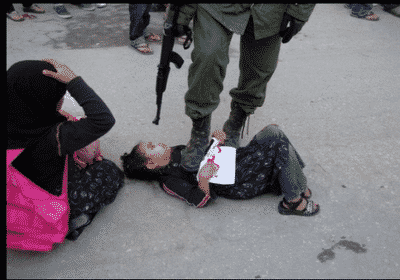
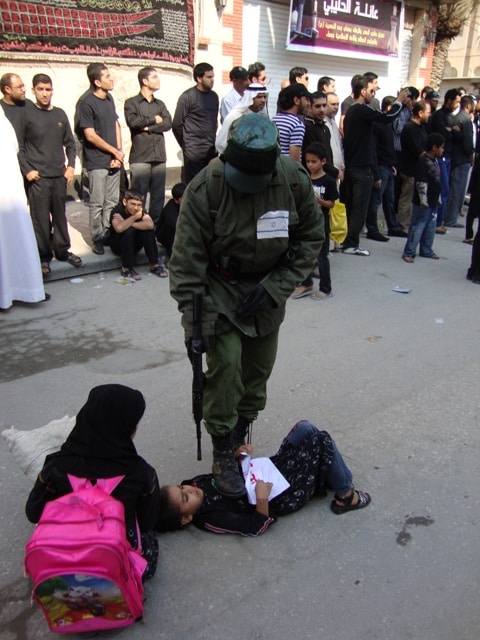
About That Viral Photo Of An “IDF Soldier” Standing On A “Palestinian Girl”

http://www.israellycool.com/2012/02/01/about-that-viral-photo-of-an-idf-soldier-standing-on-a-palestinian-girl/


The following photo, purportedly of an IDF soldier standing on a palestinian girl, has been going viral on Facebook and other social media.

Many already suspected this not to be the case, since that is not what an IDF uniform looks like, and the weapon – a Kalashnikov AK47 - is not IDF issue. Plus the IDF already denied its authenticity last year, after an investigation.

But in order to put this libel to rest once and for all, I can confirm the photo is not of an IDF soldier and palestinian girl. Rather, it is of actors playing an IDF soldier and palestinian girl during street theater in Bahrain, taken in December 2009 (hat tip: EoZ)

If you come across this pernicious lie, you can now point people to the truth.

terça-feira, 31 de janeiro de 2012

ليه أنا مؤيد لإسرائيل؟


أكبر صدمة حضارية أصابنى بها الإسرائيلين كانت حينما شاهدت لأول مرة فيديو زيارة السادات للكنيست الإسرائيلي عام 1977 ... المشهد الذى علق فى ذهنى و لم أستطع نسيانة ، لم يكن مشهد السادات أو أحد مرافقيه ، و لم يكن أحد السياسيين الإسرائيليين المشاهير و المحترمين ... المشهد الذى أثر فىّ هو حجم الجموع التى تزاحمت حول الكنيست لترحب بالرئيس المصرى ... كنت أعلم أن هناك أنصار للسلام فى إسرائيل، لكنى لم أكن أتوقع أن أرى ألوف البشر، جميعهم يرتدون الملابس البيضاء والوردية، و يحملون الزهور، و يقفون فى الشوارع بالساعات ليحيوا رئيس الدولة التى حاربتهم قبلها ببضعة سنوات ... حميمية الاستقبال المذهلة، و منظر ضباط الشرطة الإسرائيلية و هم يقومون بدورهم فى تنظيم الحشود المرحبة بالرئيس العدو- الصديق ، كانت من بين المشاهد التى غيرت حياتى ... يومها سألت نفسى: هل إذا جاء إلينا فى مصر مسئول إسرائيلى يدعم السلام ، هل سيجد نصف هذا الترحيب من المصريين ؟

لا أنكر أنى أشعر كثيرا بالذنب تجاة قراءى المصريين ، الذين صدمتهم حين قلت أنى برو-إسرائيلى ( مؤيد لإسرائيل) ، وأصدمهم باستمرار بمواقفى الداعمة للسياسات الإسرائيلية باستمرار ... أشعر بالذنب لأنى لم أشرح لهم أسباب مواقفى هذه، و لم أطلعهم على ما أعرفه عن جيراننا الإسرائيليين، ثم أطلب منهم أن يتفهموا موقفى و يتقبلونى بكل تسامح ... موقف صعب، أعذرهم عليه.
نفس الشعور بالذنب أشعر به تجاه الكثير من قراءى الإسرائيليين، الذين ألاحظ الدهشة وعدم التصديق فى تعليقاتهم ... فمنهم من يظننى مجنونا غير واعى بأبعاد ما أقول، ومنهم من يظننى فخ مخابراتى لخداع الشعب الإسرائيلى فى أطار الشعور بالمؤامرة الكبرى على الشعب اليهودى ... هم أيضا معذورون، لأنهم أيضا لا يعرفون دوافعى و أسبابى التى بنيت عليها مواقفى السياسية.
هذا المقال هو محاولة منى ، لشرح الأسباب المنطقية التى جعلتنى مؤيدا لإسرائيل. الأسباب التى تجعلنى حريصا على دعم استمرار دولة إسرائيل فى الوجود، والأسباب التى تجعلنى مؤيدا لعلاقات كاملة وحقيقية بين الشعب الإسرائيلى و سائر شعوب المنطقة.
فى الحقيقة، دعمى لإسرائيل ليس هو دعما لإسرائيل ذاتها، بقدر ما هو دعما للقيم التى تمثلها دوله إسرائيل فى المنطقة ... فالقضية ليست أن هذا يهودى وذاك مسلم، و ليست أن ذاك عربى و هذا عبرى ... القضية فى نظرى أن هذا ديموقراطى و ذاك أستبدادى، وهذا ليبرالى و ذاك شمولى ... و بالتالى فانحيازى لإسرائيل هو انحياز لقيم الديموقراطية و الحداثة التى تمثلها إسرائيل - شئنا أم أبينا - فى المنطقة.

و سأحاول هنا أن أسرد بنوع من التفصيل ، بعض النقاط التى ستوضح وجهه النظر التى أطرحها:

1- السياسة - إسرائيل هى أكبر و أقدم الديموقراطيات فى المنطقة.
النظام السياسى فى إسرائيل هو النظام البرلمانى ... نظمت أول انتخابات شعبية فى 25 يناير 1949 ، ليبدأ الكنيست الأول، و الكنيست الحالى هو الكنيست الثامن عشر فى تاريخ إسرائيل ... طوال هذه الفترة ترأس دولة إسرائيل 9 رؤساء، بداية من الرئيس شيم ويزمان (1949) حتى الرئيس الحالى شيمون بيريز (2007) ... و كل كنيست جديد كان يأتى بحكومة جديدة فى إسرائيل، أى تقريبا 18 حكومة إسرائيل ية فى 60 عام ( تقريبا حكومة جديدة كل ثلاث سنوات و ثلث ) ... و فى كل مرة تمر الانتخابات الإسرائيلية بسلاسة، بلا انقلابات مسلحة، بلا ادعاءات بتزوير الانتخابات، بلا نتائج انتخابية من نوعية ال 100% و ال 99.9%
فى ال 60 عام الأخيرة ، بينما حكم إسرائيل 18 حكومة مختلفة، حكم مصر 6 رؤساء (الملك فاروق ، الملك أحمد فؤاد ، محمد نجيب، عبد الناصر، السادات، مبارك) ... الثلاثة الأوائل تركوا السلطة نتيجة انقلابات أو حركات عسكرية ، و الرابع (عبد الناصر) ظل على عرشة حتى الموت، و لو لم يكن مات لكان سيظل حاكم مصر إلى يومنا هذا، هذا بغض النظر عن إشاعة موته مسموما ... والخامس السادات خرج من السلطة مقتولا ... و السادس باقى فى منصبة منذ 30 عام، ولا نعرف وسيلة لإخراجه من السلطة ... ففى الوقت الذى تبادل فية حكم إسرائيل 18 حكومة ديموقراطية، حكمنا 6 أشخاص، لم يصل أيا منهم للسلطة من خلال انتخابات ، ثلاثة منهم تركوا الحكم مجبرين بقوة انقلاب، و اثنين خرجوا من مناصبهم بالموت، والسادس نبحث عن وسيلة لإخراجه من السلطة لمدة 30 سنة بدون فائدة ... أعتقد أن المقارنة واضحة
يمكن لأى منا أن يفتح أى خريطة للشرق الأوسط، ولن يبذل مجهود ليكتشف أن إسرائيل هى أعظم ديموقراطية فى المنطقة ... الشرق الأوسط لم يعرف نظام ديموقراطى سوى إسرائيل حتى الغزو الأمريكى للعراق فى 2003 ... فتركيا وإيران لديهم ديموقراطيات مشوهه، فإيران تمنع العلمانيين من الترشح فى الانتخابات، و تركيا تمنع التيارات الدينية من الترشح فى الانتخابات، فما فائدة الانتخابات إذا كان المشرع قد سبق واختار للشعب أيديولوجية حكامه ؟ ... بعد إيران وتركيا، لا يتبقى فى المنطقة من أنظمة ديموقراطية غير لبنان و العراق، والاثنان ديموقراطيتان حديثتان، العراق بعد الغزو الأمريكى فى 2003، و لبنان بعد ثورة الأرز فى 2005، و كلاهما ديموقراطيات مشوهه بسبب التقسيمات الطائفية التى تسيطر على العملية الانتخابية ... وباقى دول المنطقة هى إما ممالك بدوية (مثل المملكة العربية السعودية و قطر)، أو شموليات عسكرية (مثل سوريا و مصر و السودان و ليبيا) ... كل هذا يجعلك لا تجد فى المنطقة كلها نظام ديموقراطى حقيقى سوى إسرائيل.
بل الأبلغ من كل هذا ... ديفيد بن جوريون ، الذى يعتبره الكثيرين مؤسس دولة إسرائيل ... هو من أعلن إعلان استقلال دولة إسرائيل، وشغل منصب الرئيس المؤقت لدولة إسرائيل لمدة يومين فقط، ليسلم رئاسة الدولة لرئيس الدولة الأول شيم ويزمان ... ديفيد بن جوريون لم يتحنط على كرسيه كما يفعل الرؤساء المسلمون والعرب (القذافى فى السلطة منذ 41 عام، ويسعى لتوريث الحكم لأبنه)، بالعكس ديفيد بن جوريون تنازل عن السلطة أكثر من مرة ... فعلى الرغم من كونه رئيسا للحكومة الإسرائيلية فى الفترة ما بين عامى 1948 و 1954، إلا انه خرج من السلطة فى عهد الكنيست الثانى ليخلفه موشى شاريت فى الفترة ما بين 1954 و 1955، ثم عاد بن جوريون ليرأس الحكومة الإسرائيلية بعدها ... و طوال حياة بن جوريون، كان يشغل مناصب كثيرة، و يتركها بعدها بفترات قصيرة فى تبادل سلمى وسلس للسلطة ... فمن منكم رأى رئيسا عربيا يتنازل عن منصبة لهذا الشكل السلس؟ فما بالكم وأننا نتحدث عن شخص يكاد يكون هو مؤسس الدولة ذاتها ... إذا كان عبد الناصر، لمجرد أن استطاع السيطرة على ضباط انقلاب 52، نسب لنفسه نجاحات أكبر من حجمه بمراحل، وبقى فى منصبه 16 عام ... وحسنى مبارك، الذى نسب لنفسه نصر أكتوبر كله، بقى بحجة هذا النصر ثلاثون عاما فى رئاسة الجمهورية ... فما بالكم بمؤسس دولة يترك رئاستها بعد يومين، ويترك رئاسة الحكومة بعد 6 سنوات؟ ... ألا تستحق ديموقراطية مثل هذه ان نعطيها احترامها اللائق ؟

2- العمل و الانتاج - الإسرائيليين بنوا دولة كاملة من الأبرة للمفاعل النووى فى أقل من 50 عام
إسرائيل بشكلها الحالى، هي دولة حديثة الوجود فى المنطقة ... إسرائيل القديمة التى انتهت فى القرن الأول الميلادى، لا تعنينى فى مقالى هذا ... إسرائيل الحالية بدأ الشعب اليهودى فى وضع أساساتها منذ ما لا يزيد عن قرن من الزمان ... بنوا المزارع و المدن والمصانع، و كل هذا ليس دولة... أول ظهور لدولة إسرائيل كان بعد انتهاء الانتداب البريطانى عن هذه المنطقة، ولهذا فان عمر دولة إسرائيل يبدأ تقريبا منذ عام 1948 بغض النظر عن ان بدايات هذه الدولة تم وضع أساساتها قبل ذلك بعقود.
استطاعت إسرائيل، واستطاع الشعب اليهودى، فى أقل من 50 عام، بناء دولة قوية متكاملة تغطى كافة نواحى الحياة ... فقد أقام الشعب اليهودى دولة مؤسسات كاملة، بها فصل كامل بين السلطات، بها نظام سياسى برلمانى من أفضل النظم السياسية فى العالم، و برلمان يقوم بدور رقابى وتشريعى متميز، وقضاء نزيه ومحايد حاكم أكبر السياسيين فى إسرائيل بنزاهة لم يشكك فيها أحد ... وما نقوله عن السياسة نقوله عن الزراعة و الصناعة و السياحة و التكنولوجيا.
هنا أن أقدر قيمة الإبداع مع الزمن، فنحن المصريين الذين نتفاخر اننا أبناء حضارة عمرها أكثر من 5 آلاف عام، إلا أننا لم نستطع بناء مفاعل نووى واحد (إسرائيل لديها تقريبا 4 مفاعلات نووية) ، وحينما فكرنا فى إنشاء مفاعل نووى سلمى، بدأنا البحث عن شركات فرنسية وبريطانية لتتولى عمليه إنشاؤه، وحتى يومنا هذا لازالت البيروقراطية المصرية تعطل قيام المفاعل النووى المصرى الأول ... نفس الشئ يقال عن الأقمار الصناعية، ففى الوقت الذى تقوم فيه إسرائيل بتصدير الأقمار الصناعية الخاصة بالتجسس للهند، لم تستطع مصر تصنيع أقمارها الصناعية بنفسها واشترتها من شركات فرنسية ... و فى الوقت الذى تقوم فيه إسرائيل ببيع الأسلحة لروسيا (وريثة الاتحاد السوفيتى)، تقوم المصانع الحربية فى مصر بصناعة البوتاجازات والسخانات التى لا ترضى حتى المستهلك المصرى ... و العاملون فى مجال الصناعة يعلمون جيدا كيف أن هناك صناعات بأكملها لا توجد فى الشرق الأوسط كله ، إلا فى إسرائيل
كمصريين يجب أن نعترف بالفجوة التكنولوجية التى تفصلنا عن إسرائيل ... يجب أن نعترف أن هناك شعب (وإن اختلفنا معه، إلا أن هذا الشعب يقدس العمل والإنتاج والإبداع ، شعب لا يسمح للبيروقراطية و الفساد بتعطيل مسيرة تقدمة ... شعب تجاوز صعوبات مستحيلة مثل القلة السكانية و حالات الحروب المتواصلة و العزلة بين جيرانه و التضارب العرقى والثقافى، و صنع حضارة ودولة متكاملة . بينما معظم دول المنطقة تعيش فى سلام متواصل و مع ذلك تغرق فى الكساد، و تعيش على استيراد غذائها وملابسها و احتياجاتها الأساسية، و يحكمها مجموعة من اللصوص بينما أغلب شعوبها مشغولة بالقات و الحشيش و الدين.

3- الثقافة - أفضل جامعات فى المنطقة
إسرائيل لديها 8 جامعات ... أقدمهم الجامعة العبرية فى أورشليم (القدس) التى تأسست عام 1918، أى بعد جامعة القاهرة ب 10 سنوات ... فإذا استثنينا الجامعة المفتوحة فى إسرائيل، و التى تأتى متأخرة فى الترتيب العالمى، فإن باقى ال 7 جامعات تأتى بين أفضل 500 جامعة على مستوى العالم (أحيانا تتأخر جامعات بار أيلان وحيفا بضع أرقام بعد ال 500 فى بعض التصنيفات) ... بينما تشغل الجامعة العبرية فى أورشليم ترتيب ال 77 على مستوى العالم، بما يجعلها أفضل جامعة فى الشرق الأوسط
إلى وقت قريب لم تكن هناك جامعة عربية واحدة بين أفضل 500 جامعة على مستوى العالم، و إلى يومنا هذا لا توجد جامعة مصرية أو عربية فى قائمة أفضل 200 جامعة على مستوى العالم، بعد أن استطاعت بعض الدول العربية دخول قائمة أفضل 500 ... الطريف فى الأمر، أن الجامعات المصرية بدأت تبحث عن تصنيفات أقل شهرة عالميا، او تصنع بأنفسها ترتيب للجامعات على مستوى العالم، لتستطيع أن تضع نفسها فى قائمة أفضل 200 أو أفضل 500 ... و قد كان بالأولى للجامعات العربية، أن تبحث فى أسباب فسادها وانهيارها، و تقوم بإصلاح و تطوير نفسها، بدلا من اختلاق تلك التقييمات المزيفة.
لن نتعجب أيضا حين نعرف أن إسرائيل هي أكثر دولة فى العالم تنفق على البحث العلمى (بالنسبة للدخل القومى) ... فإسرائيل تنفق حوالى 4.7% من إنتاجها الوطنى GDP على البحث العلمى، وهو رقم ضخم جدا إذا علمنا أن الولايات المتحدة الأمريكية تنفق فقط 2.6% من إنتاجها المحلى على البحث العلمى .... ماذا تنفق الدول العربية على البحث العلمى ؟ ... إجمالى ما تنفقة إسرائيل سنويا على البحث العلمى، يفوق ما تنفقة جميع الدول 22 الأعضاء فى جامعة الدول العربية على البحث العلمى.

منذ اعوام تم نشر إحصائية تقارن بين معدلات الثقافة و القراءة بين دول العالم ... المواطن الإسرائيلى يقرأ فى المتوسط 40 كتاب سنويا ، بينما كل 8 مواطنين مصريين يقرأون كتاب واحد سنويا ... معنى هذه المعلومة أن ما يقرأه إسرائيلى واحد فى 10 أعوام، يحتاج المواطن المصرى ل 3200 عام لكى يقرأ نفس الكمية .... فارق كبير حينما تقارن بين دولة العلم و التكنولوجيا (إسرائيل) ، وبين الجهل المستشري فى الدول الناطقة بالعربية.

4- حقوق الإنسان - أعظم مساحة حريات فى المنطقة
لى صديقة إسرائيلية من أصول عربية ... فوجئت بأنها رجعت من مدرستها مبكرا فى أحد الأيام، فظننتها مريضة ... سألت عليها لكى أطمئن على صحتها، فأخبرتنى أنهم (فى إسرائيل) فى شهر رمضان يسمحون لطلبة المدارس العربية بالرجوع مبكرا (مراعاة لصوم رمضان ) ... الصدمة الحقيقية أننى لا أنسى كيف ظللت طول حياتى فى مصر يتم إجبارى على أن أجتاز إمتحاناتى أيام أعيادى الدينية (فترة اعتناقى بالمسيحية) ... فالمسيحيون المصريين الذين يعيشون فى مصر منذ بداية التاريخ (بغض النظر عن تاريخ تحولهم للمسيحية) لا زالوا حتى اليوم هدفا لتعنت المسئولين الحكوميين الذين يتعمدون إجبار الطلاب المسيحيين على إجراء امتحاناتهم فى أيام الأعياد، أو اليوم الذى يلى العيد .... هذا هو الفارق بين أوضاع الأقليات الدينية فى مصر و إسرائيل.
إسرائيل - على عكس ما يظن العرب - لديها مستوى عالى من حقوق الإنسان لا يوجد فى أى دولة عربية ... فإسرائيل مثلا لا توجد لديها عقوبة الإعدام، ولا أى عقوبة بدنية أخرى ... فى الشرق الأوسط كله لا يوجد إلا تركيا لا تطبق حكم الإعدام، و بعض الدول توقفت عمليا عن ممارسته دون تقنين ذلك (المغرب – تونس – الجزائر) ، فى الوقت الذى لا تزال فيه الكثير من الدول الاسلامية (مثل إيران والسودان والسعودية) تطبيق العقوبات البدنية مثل الجلد و قطع الأيدى والرجم ... ما يقال عن الإعدام و العقوبات البدنية، يمكن قوله عن حقوق الطفل والمرأة، و حرية الرأي و العبير ... إسرائيل لا يوجد لديها خانة ديانة فى البطاقة الشخصية ... إسرائيل هي الدولة الوحيدة فى الشرق الأوسط التى يستطيع فيها المثليين تنظيم أنفسهم فى تنظيمات حقوقية ... إسرائيل هي الدولة الوحيدة فى الشرق الأوسط التى يستطيع فيها الملحدين تكوين تجمعات إلحادية قانونية، ونشر أفكارهم الإلحادية بكل حرية ... إسرائيل هي الدولة الوحيدة التى يمكنك أن تكون مواطنا فيها، ومع ذلك لا تعترف بحقها فى الوجود، و فى نفس الوقت لا يتم سحب الجنسية منك أو سجنك أو حتى رفع إعانة البطاله عنك ... إسرائيل هي الدولة الوحيدة فى الشرق الأوسط التى يستطيع فيها الإعلام نشر فضائح للجيش (تذكروا فيلم روح شاكيد)، وهي الدولة الوحيدة التى يمكن أن يقوم تليفزيون الدولة الرسمى بنقد دين الأغلبية بكل بساطة و دون أن تعلق المقاصل لأحد.

إسرائيل وقفت بجانب كل ضعيف و مظلوم فى المنطقة ... دول أفريقية لا نعرف عنها شيئا، وإسرائيل ترسل لهم معونات باستمرار ... أهالى دارفور المسلمون، الذين تعرضوا للإبادة الجماعية والاغتصاب و التهجير على يد إخوتهم المسلمين من نظام البشير الإسلامى ... أهالى دارفور هؤلاء هم الذين يهربون من خلال الأراضى المصرية ليدخلوا إسرائيل لينالوا حق اللجوء السياسى، و يعيشون كبشر أحرار ... ماذا فعل العرب والمسلمون للأكراد أو لأهل دارفور؟ ... كم مظاهرة خرجت فى مصر تضامنا مع أهل دارفور؟ كم مظاهرة خرجت فى مصر تضامنا مع الأكراد ضد المجرم صدام حسين الذى قتل ألوف الأكراد بدون ذنب؟ ... نحن المصريين لم نكتفى بالصمت، ولكننا قتلنا السودانيين وسحلناهم وعذبناهم فى وسط شوارع الجيزة أمام أعين الجميع بلا رحمة ... كل هذا وأهل دارفور مسلمون، والإسرائيليين يهود، ولكن الدولة الإسرائيلية تتجاوز حدود العرق و الدين لتقف بجانب المضطهدون، بينما العرب لا مانع لديهم من الصمت على ظلم إخوتهم بدون حتى مبرر منطقى لهذا الصمت، بالضبط كما فعلوا حينما صمتوا حينما قام صدام باحتلال الكويت، ثم ثاروا وهاجوا وماجوا حينما شاركت مصر فى تحرير الكويت من الاحتلال الصدامى ... ألا يتساءل المصريين حول مشاعر إخوتهم الكويتيين حينما يرون هذه الأفعال؟
منذ اشتعل ملف دول حوض النيل فى الشهور الأخيرة، وبدأت أجهزة الدولة المصرية فى الترويج لسيناريو المؤامرة الإسرائيلية فى دول حوض النيل .... بالنسبة لى، لا أرى أى مؤامرة على الإطلاق ... فالمصريين لم يسألوا أنفسهم ماذا يعرفون عن أثيوبيا و ماذا قدموا لها ؟ ... ماذا يعرف المصريين عن الفقر و الأمراض والفياضانات وباقى الأمور التى تعانى منها أثيوبيا ؟ لماذا لم يتعاطف المصريين مع أخوتهم الأفارقة الأثيوبيين فى مشاكلهم ؟ ... إسرائيل تعاطفت مع أثيوبيا منذ سنوات طويلة ، و تقدم لها الكثير من المساعدات لتحاول مساعدة الشعب الأثيوبى فى التخلص من مشاكلة ... فمن الطبيعى أن تكون هناك علاقات إسرائيلية أثيوبية قوية ... وفى نفس الوقت من الطبيعى ألا يكون هناك ود متبادل بين المصريين و الأثيوبيين فى ظل الاستعلاء العنصرى الذى يتعامل به المصريين مع السود (اسألوا النوبيين إن كنتم لا تعلمون)، و فى ظل تجاهل انشغال المصريين بتمويل الحركات الإرهابية فى أفغانستان وفلسطين واليمن ... فإذا كانت غزة أكثر أهمية بالنسبة للمصريين من أثيوبيا، فلماذا يتضايق المصريين حينما يفقدون علاقتهم بأثيوبيا التى تجاهلوها إنسانيا لعقود طويلة ؟

5- السياسة الخارجية الإسرائيلية مبنية على المصلحة مش على العنصرية
الأصل فى الأمور، أن السياسى هو شخص اختاره الشعب لتحقيق مصالحهم، وليس لتحقيق وجهات نظرة الأيديولوجية الخاصة ... هذا بالطبع لا ينطبق على السياسيين العرب الذين وصلوا للحكم بالدبابات، ولكنه بالطبع ينطبق على إسرائيل فحزب الليكود مثلا، والذى يتهمه العرب باستمرار بأنة حزب يمينى متطرف، هو ذات الحزب الذى قام بتحدى أيديولوجيته فى فتره قصيرة جدا، ووقع اتفاقية السلام مع مصر، و قام بإرجاع سيناء بأكملها بدون مقابل تقريبا (باعتبار حق إسرائيل فى الملاحة فى المضايق الدولية حق وليس منحة )... لا يسأل المصريون أنفسهم : كيف يكون حزب متطرف ويقوم بعقد اتفاقية سلام (رغم أنه يسيطر على كل سيناء تقريبا ) و يترك سيناء للمصريين بدون حرب ؟ ... الفكرة أن الساسة يهمهم مصلحة إسرائيل، أكثر من الأيديولوجيات النظرية .... و مصلحة إسرائيل أن تعيش بسلام وسط جيرانها ... لو بدلنا المواقف وقتها ، وكانت مصر فى مكان إسرائيل، لم تكن مصر ستتنازل عن شبر واحد من سيناء بالسلام، بالضبط كما تفعل في تمسكها بالأراضي السودانية التي تحتلها حاليا (حلايب و شلاتين).
نفس الشئ يمكن قوله عن المفاوضات مع الفلسطينيين والسوريين واللبنانيين ... فالعرب ظلوا لعقود يرددون كلاما أبلها عن الأمبراطورية التى من النيل للفرات، ولكن إسرائيل هدمت كل هذه الأطروحات العربية فى لحظة واحدة على مائدة المفاوضات، حينما أمرت بتفكيك مستوطناتها فى غزة ... يومها وقف الجيش الإسرائيلى بنفسه يباشر إجلاء المستوطنين الإسرائيليين من منازلهم التى بنوها فى غزة ، ليتركوها للفلسطينيين ... فإذا كانت إسرائيل ترغب فى التوسع فى المنطقة (الأيديولوجيا) ، فلماذا فككت مستوطناتها فى غزة أو انسحبت من سيناء (المصلحة) ؟ ... هذا لأن السياسة الخارجية الإسرائيلية تغلب المصلحة على الأيديولوجيا.
العكس موجود عند السياسيين العرب... فالسياسيين السوريين يعلمون جيدا أنهم بإمكانهم أجراء اتفاق سلام بسهولة مع إسرائيل، ولكنهم لازالوا غير قادرين على تغليب مصلحة شعوبهم على أيديولوجياتهم الضيقة الرجعية ... الأحمق وحده هو من يعذب شعب كامل من أجل أيديولوجيا حمقاء... فى نقاشاتى مع المسيسين السوريين، لم يعطونى ردودا منطقية حول فكرة السلام مع إسرائيل، كل كلامهم عبارة عن كلمات عبثية عن أن إسرائيل كيان صهيونى و ليست دولة، وان القضية هي قضية فلسطين و ليست سوريا ... هل انت مسئول فلسطينى أم سورى؟ أنت مسئول سورى وظيفتك تحقيق مصالح الشعب السورى. فبأي ذنب تجبر الشعب السورى على الحياة فى حاله حرب متواصلة (يلتهم فيها الجيش الجزء الأكبر من ميزانية الدولة) لمجرد أن هناك أيديولوجيا تطلب منك أن تظل فى حالة حرب أبدية مع دولة تفوقك عسكريا عشرات المرات؟
ما يقال عن السياسة يقال أيضا عن الثقافة ... إسرائيل بها متطرفون أيضا ، كل دول العالم بها متطرفين ... لكن الدولة الإسرائيلية لا تعرف أى نوع من العبث الخاص بالغزو الثقافى والحفاظ على الهوية القومية والبلا بلا ... الأفلام العربية (والمصرية تحديدا) تذاع باستمرار فى التليفزيون الإسرائيلى، و يشاهدها الإسرائيليين بدون حساسية، بينما نحن تتزلزل الدنيا عندنا إذا ما قام مركز ثقافى بعرض فيلم إسرائيلى يدعو للسلام بين الشعبين ... اللغة العربية لغة رسمية فى إسرائيل، ولديهم فى إسرائيل مجمع للغة العربية مماثل لمجمع اللغة العربية الموجود بالقاهرة ... لا ينظر الإسرائيليين للغة العربية على أنها تهديدا لثقافتهم وهويتهم أو وجودهم، بل يرون أن مصلحتهم فى التعايش مع جيرانهم ... الشعوب العربية تفهم الهوية بمعادلة "أنا موجود، إذن أنت غير موجود"، بينما المصلحة تحتم أن يستمر كلانا فى الوجود، ونتوقف عن محاوله محو الآخر من الوجود.

خاتمة
المقارنات السياسية والإجتماعية والأنثروبولوجية بين المجتمع الإسرائيلى والمجتمعات العربية، موضوع ثرى لا يمكن حصره فى مقال واحد ... أردت هنا فقط أن أوضح النقاط الرئيسية التى تميز المجتمع الإسرائيلى عن باقى المجتمعات التى تحيط به فى الشرق الأوسط .... و هذه الفروق هي التى تفرض علي أن أنحاز لحق دولة إسرائيل الكامل فى الوجود بسلام فى المنطقة، وهي نفسها التى تفرض عليا الوقوف بجانب إسرائيل كدولة ديموقراطية حداثية يعيش شعبها كمواطنين أحرار فى منطقة من العالم يعتبر فيها التفكير فى الحرية جريمة.
بالطبع ، موقفى هذا لا يعنى أنى أتفق مع إسرائيل فى كل صغيرة وكبيرة، ولا يعنى أنى أدعم إسرائيل فى أى موقف خاطئ تتخذة ... فالإسرائيليين أنفسهم لا يتفقون على أى شئ، بما فية حق دولة إسرائيل فى الوجود ... فإذا كان لا يوجد مواطن إسرائيلى يتفق مع سياسة دولتة فى جميع المواقف، فبالتأكيد لا يمكن أن يوجد داعم لإسرائيل يتفق مع السياسات الإسرائيلية جميعها ... أنا فقط أدعم حقوق دولة إسرائيل، و أدعم الكثير من الخطوط العريضة فى السياسة الإسرائيلية، لأنى متفهم لدوافعها و حيثياتها.
و هذا بالتأكيد يعنى أن هناك نقاط اختلاف بينى وبين السياسات الإسرائيلية ... منها على سبيل المثال الموقف الرسمى فى إسرائيل من السلاميين الإسرائيليين ... فأنا لازلت غير قادر على تصديق أن الشعب اليهودى الذى عانى من الأضطهاد ما يقرب من 20 قرن بسبب معتقدة الدينى، حينما يؤسس دولة يبدأ فى اضطهاد بنى شعبة بسبب معتقداته الضميرية !!! ... لا أنكر أنى شعرت بالخجل حينما تم إعفائى من الخدمة العسكرية فى مصر بعد إعلانى أنى لن اخدم بالجيش بسبب معتقداتى السلامية ، بينما زملائى السلاميين فى إسرائيل فى السجون الإسرائيلية ... هذه نقطة تحتاج للمراجعة فى السياسة الإسرائيلية.

domingo, 29 de janeiro de 2012

Tuba Zanghariya mosque fire was set by Muslims

http://israelmatzav.blogspot.com/

I trust that many of you remember the Tuba Zanghariya mosque fire back in October, and all the Israeli politicians tripping over each other to apologize to the 'Israeli Arabs' and to blame the evil 'settlers' for another 'price tag' attack. If you don't read French, you probably don't know that the crime has been solved. I know you'll all be shocked to hear that no 'settlers' were involved. The Tuba Zanghariya mosque was burned down by Islamists (link in French).

As it happens, my French is quite poor (I haven't really used it in nearly 40 years), so I'm going to post a Google translation, and if anyone speaks French and can make it clearer, please chime in. There's also a video report I'm posting at the end of this - that's in Hebrew.
On October 3, an AFP report, published by L'Express among others, and taken up by many French media reported the arson of a mosque in a Bedouin village in northern Israel, Touba-Zangariyya .

The Express attributed, without nuance or reservation or doubt expressed in the "settlers" in Israel.

Criminals who left behind them on a wall in the place of worship burned, the inscriptions "price tag" the price. Words that had been used by extremists of Jewish settlements, tagged with graffiti on a mosque in the West Bank Arab village of Yatma, two months earlier.

The initial police suspicion fell upon Israeli extremists with an identical profile, but failed to identify the culprits.

Mena had reacted immediately upon the announcement of the fire, in a dispatch dated October 3 (Fire of the mosque in the Upper Galilee: rogue!), Writing that it was highly unlikely that this event is the result of a political act committed by Jewish settlements.

Analysts at the agency, like many people in the upper Jordan Valley, in fact, knew enough about their region and the peculiarities of the village concerned, to issue this warning.

...

At Mena, we felt very strongly a new scrambles, telling us that everyone was wrong. But intuition is not a certainty for a journalist, and certainly does not replace the need to conduct a thorough investigation. That we did. It is in that context that I went to Touba-Zangariyya to meet with an important chieftain (Visit to Dalton City, Galileo). In writing, we did not cease to follow the evolution of events.

And, as usual, a few months after the crime, the languages ​​began to loosen. Until a resident of Touba-Zangariyya, Bassem Souad, a Sunni Muslim, does not reveal the essential elements of the identity of criminals.

The man, under clear from the very imposing stature, took only a few minutes before giving me the interview I had to ask. A few hours later, he gave me a demonstration of what it was impossible that the fire has been committed by Jews. Conversely, Souad showed me that this act of arson was committed by people of his village.

"This mosque was burned Zangariyya" (Zangariyya-Touba is the result of the unification of the two villages and Zangariyya Touba), explain my interlocutor.

"Individuals from outside would have set fire to the mosque of Touba, the single entry of the two villages. For those of Zangariyya to join, you have to take a long road begins with Touba, and, above all, through the entire village. Arsonists Jews, burning a mosque under these conditions, with constant tension prevailing in the village, and dozens of machine guns and grenades in it, had virtually no chance of coming out alive.

On the other hand, the impact that media seeking the perpetrators of this mischief, there was no difference between destroying the mosque Zangariyya, or of Touba, located only a few steps from the exit of the village. Sensible person would have taken a risk as useless! "Says our man.

"For the rest," said Bassem Souad, "entries drawn on the ruins of the mosque have been using a piece of coal. It is a means commonly used by the Arabs, unlike the Jews, who, at all price tag in the West Bank, have used sprays.

This crime, "says the 43 year old man," was committed for political reasons. It is the prerogative of a small Islamist faction of Touba, recently formed, whose aim is to cause trouble between Jews and Arabs. Everyone in the village knows what group it is, but one is to tell the police as informers in our tradition, part of a crime more serious than that which was committed. Still, this small group tried awkwardly to imitate the way of acting Jewish extremists in order to be accused of this act. "

In advancing such remarks, Bassem Souad knows he risks his life. But that does not stop men like him to do what they consider just and necessary. It should be noted that, like other Bedouin, Souad is a reserve lieutenant colonel in the Israeli army, he spent over twelve years in Lebanon as such, most of them at the head of commandos special.

Still, the risk is very tangible. Thus, hours after the broadcast of an interview on Israeli Channel Two television, despite the security measures deployed around his home, the men shot at his house and its occupants live ammunition. They have missed the head of his 16 year old daughter a few centimeters.

His 17 year old son, who also prepares to join the ranks of the IDF in a month, was almost murdered. A hooded man, probably one of the Islamists, threw himself on the young man with the intent to stab him. Fortunately, the villagers who were nearby were able to repel the potential murderer.

A-Zangariyya Touba, we do not resolve their disputes in court, but stab wounds, machine guns, grenades and firebombs. These are four good reasons why the locals to remain silent, even if, privately, they say they revolted by the crimes of the Islamists.

Islamists, who may also make future costs of these laws Western, even though nothing in the words of Souad, evokes the possibility.
Read the whole thing. And here's the video of the Channel 2 interview with Mr. Souad, referred to above. Unfortunately, it's in Hebrew only, without subtitles.

Let's go to the videotape.


By the way, this story is two weeks old, and there is not a single link in the Google search that is not in French. At least until now.

For you non-Israelis, you may not realize just how big a deal was made of the Tuba Zanghariya mosque fire - for which 'settlers' were blamed - in October.

UPDATE 12:37 AM

Here's a Hebrew blog about it in December telling the same (ignored) story. I doubt you'll see it in the New York Times tomorrow either.

UPDATE 1:12 AM

Here's the original Channel 2 report (the one I showed you earlier was the one on the shooting at Souad's house). This is the report where Souad says that the mosque was burned by Muslims. Again, sorry, but it's Hebrew only with no subtitles.

Let's go to the videotape.