sexta-feira, 9 de março de 2012

The "Apartheid State" That Minorities Keep Struggling To Get Into

by Ramzi Abu Hadid
March 1, 2012


Has Ashrawi, the self-declared human rights advocate, never heard of the thousands of Palestinians from the West Bank and Gaza Strip who try to infiltrate into Israel every morning in search of work and a better life?

Prominent PLO spokeswoman Hanan Ashrawi is demanding that the international community declare Israel an "Apartheid State." Her demand was included in a statement she published in Ramallah this week: she accused Israel of incitement against Arabs and of violating international laws.

How come she never mentions the incitement of Palestinians against Israelis in the Palestinian government-issued textbooks, or in the schools and summer camps named after terrorists, or in the government-controlled TV stations which just last week again glorified terrorists with video celebrations again and again of the tenth anniversary of the Democratic Front for the Liberation of Palestine, a group that over the years has killed dozens of Israelis, including many children?

How come Ashrawi never mentions that in Saudi Arabia there is not only gender apartheid -- in which women have virtually no rights and are kept as virtual prisoners, unable to travel without the permission of a male guardian or relative, even if he is a child or retarded or mentally defective -- but also that there are separate roads marked for Muslims to drive on and for non-Muslims to drive on? You are not even allowed to bring a Bible into the country. How come those acts are not "Apartheid"?

How come Ashrawi never mentions that here in Jordan the government has been trying to strip thousands of us Palestinians of our Jordanian citizenship -- a move Israel never made against its Christians and Muslims.

As an Arab Christian, Ashrawi would have done better if she had chosen to focus on the plight of her fellow Christians in the Palestinian territories, many of whom continue to complain about persecution and harassment from Muslims.

Has Ashrawi, the self-declared human right rights advocate, never heard of thousands of the Palestinians from the West Bank and Gaza Strip who try to infiltrate into Israel every morning in search of work and a better life?

Why has it become the dream of many Arab Christians and Muslims to emigrate to the "Apartheid State"? Is it possible that all these people are uninformed? Or do they really know the truth about Israel, the only democracy in the Middle East? In Egypt, Syria, and Iran, for example, government officials put journalists in jail, but Israel is the only country in the region where one small journalist nobody has ever heard of can put a government official in jail.

In the past few decades, many Christian families from Bethlehem and even the Gaza Strip have moved to live in Israel because they feel safer in the "Apartheid State" than they do among their Muslim "brothers".

Has Ashrawi ever asked herself how come dozens of Christians and Muslims from neighboring Arab countries and Africa try to infiltrate the border into Israel every day, or how come so many of her fellow Christians want to live in the "Apartheid State"?

Is Ashrawi aware of the fact that while Christians are being persecuted and slaughtered in the Arab world and Africa, the Jewish state remains the safest place for them to live? Is she aware that the Christian population in Israel is on the rise while in the Arab and Islamic world it is dwindling -- and even faster in places such as Nigeria, Egypt and the Sudan where Muslims are slaughtering Christians?

What has Ashrawi done to promote the rights of women and freedom of speech under Hamas and Fatah?

On the same day that she issued her appeal to the international community, a Palestinian court in the West Bank sentenced a man to only five years in prison for murdering his sister. And on the same day also, Palestinian policemen raided a university campus near Ramallah and threatened peaceful protesters and reporters.

Tens of thousands of Arabs and Muslims have put their lives at risk by crossing the border into Israel from Egypt, where border guards often open fire at women and children.

Does Hannan Ashrawi really care about Palestinians, or is she just being paid by Europeans and Western NGOs to keep bashing the region's only democratic country, which, though admittedly not perfect, still tries harder than any other to treat all of its people with decency and equality?

sexta-feira, 2 de março de 2012

O sionismo dos cristãos libaneses

http://orientemedioemfotos.blogspot.com/2012/02/fonteira-israel-x-libano-o-sionismo-dos.html


Ao invocar o nome ‘Líbano’ nos dias de hoje, nos vêm a mente imagens de jihadistas fanáticos enlouquecidos e de inimigos mortais de Israel, mas nem sempre foi esse o caso. De fato, houve uma época em que existiu uma forte tendência pró-sionismo dentro da Igreja Maronita do Líbano (a maior e mais poderosa comunidade religiosa de então). O movimento foi liderado pelo patriarca maronita Pierre Antoine Arrida e pelo arcebispo Ignace Mubarak de Beirute. A união era natural, já que ambos os grupos eram minorias religiosas numa região hostil dominada por muçulmanos.

Tudo começou quando a Igreja se aproximou da agência judaica e um pacto foi formado (que deveria ser mantido sob sigilo, para não despertar a ira dos muçulmanos).
A postura da Igreja não refletia um consenso de opiniões entre a população cristã – o partido Falange, fundado por Pierre Gemayel, não apoiou a criação do Estado de Israel principalmente por causa de preocupações econômicas. O partido também não apoiava os isolacionistas da Igreja que queriam criar um Estado cristão independente no Monte Líbano e em seus arredores.

PRIMEIROS ENCONTROS
O primeiro encontro entre os colonos judeus e libaneses foi sob circunstâncias infelizes. Durante a guerra maronita-drusa de 1860 – que teve os drusos com vitoriosos e os maronitas como vítimas de grandes massacres – os libaneses, em desespero, se voltaram para a Europa em busca de ajuda. As duas primeiras personalidades europeias a responder foram Sir Moses Montefiore, um abastado líder judeu londrino, e Adolph Cremieux, um ilustre estadista francês também de origem judaica. Montefiore garantiu que a situação dos Maronitas receberia cobertura de destaque no periódico ‘Times’ de Londres e criou um fundo, com seus próprios recursos, para ajudar os sobreviventes. Já Cremiuex teve papel fundamental no envio das tropas francesas para o Líbano. A intervenção francesa acabou por salvar os cristãos e levou a criação de um terrotório controlado por maronitas chamado Mutasarifiya.

ASSISTÊNCIA JUDAICA AOS CRISTÃOS DURANTE A PRIMEIRA GUERRA MUNDIAL
Mais tarde, na sequência da Primeira Guerra Mundial, as hostilidades entre muçulmanos shiitas e cristãos maronitas chegaram a seu ápice. A maioria dos habitantes das aldeias cristãs atingidas (entre eles Deir Mimus, Majaryoun, Jedida e Abel al-Kumh) fugiu, e muitos terminaram na cidade de Sidon, famintos e miseráveis.
Pinchas Naama, que trabalhou para a Agência Judaica nas comunidades judaicas do Levante, enviou uma mensagem urgente a seus superiores em Jerusalém solicitando fundos emergenciais para assistir os refugiados cristãos. Os refugiados foram alimentados e vestidos e seus filhos foram admitidos na escola judaica em Sidon.

Esses atos filantrópicos foram lembrados anos mais tarde pela Igreja Maronita e acabaram por causar um grande impacto em suas opiniões e atitudes para com a comunidade judaica e o Estado de Israel.


Palavras do patriarca Arrida em um discurso na sinagoga de Beirute, em 1937:

"Os judeus não são apenas os nossos antepassados, mas nossos irmãos. Nossa origem é a mesma, a nossa língua é quase comum e nosso pai é o pai deles. Estamos orgulhosos de pertencer à mesma raça. Devemos tudo ao judaísmo, os nossos ensinamentos são tirados de sua lei sagrada. Nossa fé é semelhante. Nós amamos o mesmo Deus e amamos Jerusalém tanto quanto eles. Nós queremos, sinceramente, que nossa relação com eles seja constante e que renda muitos frutos. Nos ajudamos uns aos outros e desejamos, com todo nosso coração, que Deus liberte os judeus das opressões e perseguições de que são vítimas. Nós manifestamos nossos mais sinceros votos de paz e tranquilidade aos judeus, porque sentimos o quão sincero e precioso é o seu amor por nós."


Arrida também esteve envolvido em esforços de salvamento dos judeus alemães após a ascensão de Hitler ao poder naquele país. Ele e outros líderes cristãos libaneses sugeriram a idéia de permitir a entrada desses judeus no Líbano.

Dez anos mais tarde, quando a demanda por um Estado judeu foi ganhando força, a ONU criou uma comissão especial para examinar a viabilidade de estabelecer esse estado. Segue abaixo o depoimento do arcebispo Mubarak em frente da comissão UNSCOP:

Beirute, 5 de agosto de 1947

Senhor:

Lamento que a minha ausência na Europa coincidiu com a visita da Comissão Especial sobre a Palestina, caso contrário eu teria tido a oportunidade de expressar minha opinião - que é, aliás, a da maioria do povo libanês - com relação a esta questão.

Esta não é a primeira vez que expresso minha opinião sobre esta matéria. Muita tinta já foi gasta e, depois de cada uma das minhas denúncias, a imprensa mundial tem aproveitado as minhas palavras e feito diversos comentários sobre tudo o que disse.

Aqui no Oriente Médio – que é em sua maioria muçulmano – se o atual governo libanês for reconhecido como tendo um direito oficial para falar em nome da nação libanesa, nos sentimos obrigados a responder e a provar que os atuais governantes representam apenas a si mesmos e que as suas chamadas “declarações oficiais” são ditadas apenas pelas necessidades do momento e por uma solidariedade imposta neste país eminentemente cristão, graças as suas ligações com os países islâmicos que o cercam por todos os lados e o mantém em sua órbita político-econômica.

Em razão de sua posição geográfica, história, cultura e tradições, da natureza de seus habitantes e de seu apego a sua fé e a seus ideais, o Líbano tem sempre, mesmo sob o jugo otomano, se mantido longe das garras das outras nações que o rodeiam e tem conseguido manter sua tradição intacta.

Por outro lado, a Palestina, o centro ideológico de toda a Bíblia, sempre foi a vítima de todas as dificuldades e perseguições. Desde tempos imemoriais, qualquer coisa com qualquer significado histórico sempre foi saqueada, pilhada e mutilada. Sinagogas e igrejas foram transformadas em mesquitas e, não sem razão, a importância dessa parte ao leste do Mediterrâneo foi reduzida a nada.

É um fato incontestável que a Palestina foi a casa dos judeus e dos primeiros cristãos. Nenhum deles era de origem árabe. Pela força brutal da conquista eles foram forçados a se converter à religião muçulmana, e é essa origem dos ‘árabes’ naquele país. Pode-se deduzir daí que a Palestina algum dia foi árabe?

Vestígios históricos, monumentos e lembranças sagradas das duas religiões permanecem vivos como evidência do fato de que este país não estava envolvido na guerra entre príncipes e monarcas do Iraque e da Arábia. Os Lugares Santos, os templos, o Muro das Lamentações, as igrejas e os túmulos dos profetas e santos, enfim, todas as relíquias das duas religiões, são símbolos vivos que, por si só, invalidam as declarações agora feitas por aqueles que têm interesse em fazer da Palestina um país árabe. Incluir a Palestina e o Líbano no grupo de países árabes é negar a história e destruir o equilíbrio social no Oriente Médio.

Estes dois países, essas duas pátrias, provaram até agora que suas exitências como entidades separadas e independentes são úteis e necessárias.

O Líbano, antes de tudo, sempre foi e continuará sendo um santuário para todos os cristãos perseguidos no Oriente Médio. Foi lá que os armênios que escaparam do extermínio na Turquia encontraram refúgio. Foi lá que os caldeus do Iraque encontraram um lugar seguro quando foram expulsos de seu país. Foi lá que os poloneses, numa Europa em chamas, se refugiaram. E foi lá que os franceses, forçados a fugir da Síria, encontraram proteção. Foi lá que as famílias britânicas da Palestina, fugindo do terrorismo, encontraram refúgio e proteção.

O Líbano e a Palestina devem continuar a ser o lar permanente das minorias.

E qual foi o papel dos judeus na Palestina? Considerando sob esse ângulo, a
Palestina de 1918 parece-nos um país árido, pobre, despojado de todos os recursos e o menos desenvolvido de todos os vilarejos turcos. A colônia muçulmano-árabe vivia no limite da pobreza. A imigração judaica começou, as colônias foram formadas e estabelecidas e, em menos de vinte anos, o país foi transformado: a agricultura floresceu, grandes indústrias foram estabelecidas e a riqueza veio para o país.

A presença de uma nação tão bem desenvolvida e laboriosa ao lado do
Líbano não poderia deixar de contribuir para o bem-estar de todos – o judeu, que é um homem de habilidade executiva prática, e o libanês, que é altamente adaptável e, por essa
razão, sua proximidade viria para melhorar as condições de vida dos habitantes.

Do ponto de vista cultural, estes dois países podem se gabar de ter tantos intelectuais e pessoas cultas quanto todos os outros países do Oriente Médio somados. Não é justo que a lei deva ser imposta por uma maioria ignorante desejosa de impor sua vontade.

Não seria justo permitir que um milhão de seres-humanos evoluídos e educados sejam joguete de poucas pessoas que, eventualmente estejam no comando e que liderem alguns milhões de ignorantes involuídos que ditam a lei como bem entendem.
Existe uma ordem no mundo, uma ordem que estabelece o equilíbrio adequado. Se as Nações Unidas estão realmente desejosas de manter essa ordem, elas devem fazer todo o possível para consolidá-la.

As principais razões de natureza social, humanitária e religiosa exigem a criação, nesses dois países, de duas pátrias para as minorias: um lar cristão no Líbano, como sempre houve, e um lar judaico na Palestina. Estes dois centros, ligados um com o outro geograficamente e se apoiando e ajudando economicamente, farão a ponte necessária entre o Ocidente e o Oriente, a partir do ponto de vista da cultura e civilização. As relações de vizinhança entre estas duas nações contribuirão para a manutenção da paz no Oriente Médio, que é tão dividido por rivalidades, e vai diminuir a perseguição de minorias, que sempre encontrarão refúgio nestes dois países.

Essa é a opinião dos libaneses que eu represento e é a opinião deste povo a quem a sua Comissão de Inquérito foi incapaz de ouvir.

Por trás das portas fechadas do Hotel Sofar vocês só foram capazes de ouvir as palavras ditadas aos nossos chamados ‘representantes legais’ pelos donos e senhores dos países árabes vizinhos. A voz real dos libaneses foi sufocada pelo grupo que falsificou as eleições de 25 de Maio.

O Líbano exige a liberdade para os judeus na Palestina – da mesma forma que deseja a sua própria liberdade e independência.

Tenho a honra de ser, etc,

(assinado) Ignace Mobarat (Mubarak)

Arcebispo maronita
de Beirute.


Carta traduzida para o inglês
Original em francês


_____________________________

Infelizmente, as palavras do patriarca Arrida se mostraram proféticas.

"Incluir a Palestina e o Líbano no grupo de países árabes é negar a história e destruir o equilíbrio social no Oriente Médio."

O Líbano, que - junto com o Egito - sempre foi o país mais tolerante e cosmopolita do Oriente Médio, se viu mergulhado em uma sangrenta guerra civil com o aumento da população muçulmana e com as intervenções da Síria. O país, que sempre teve os cristãos maronitas como maior grupo religoso, tem hoje apenas 39% da sua população professando essa fé. Estima-se que os muçulmanos já sejam mais de 60%.

De acordo com dados do governo libanês (1997), a população do país é de 3,111,828 (com mais 400.000 palestinos muçulmanos que não são considerados cidadãos pelo governo).
Acredita-se que 10.000.000 de descendentes de libaneses - grande maioria formada por cristãos fugindo da guerra civil e de perseguições religiosas - vivam no exterior. Só no Brasil eles são 7.000.000 (85% cristãos).

quinta-feira, 23 de fevereiro de 2012

O fundador do terrorismo

Artigo escrito pelo jornalista Jorge Pontual em resposta a uma carta aberta assinada por Noam Chomsky, José Saramago, John Berger e Harold Pinter

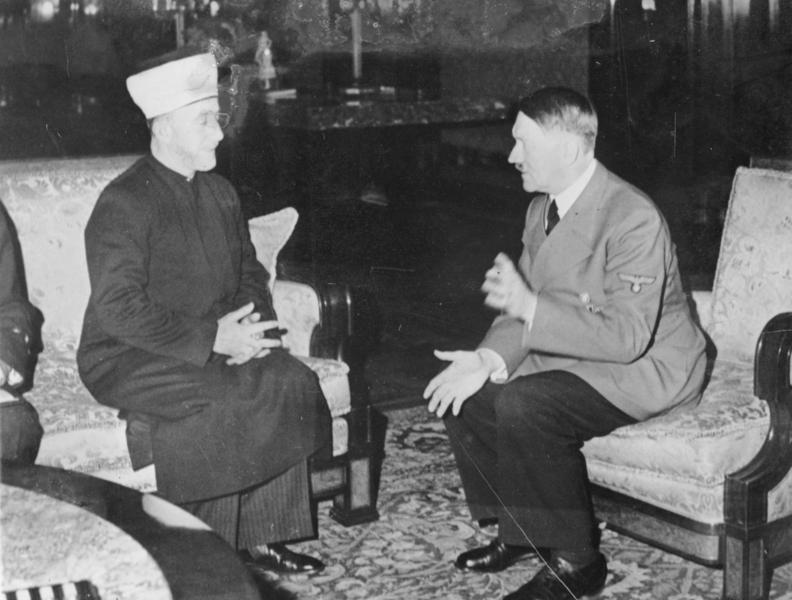
Haj Amin al-Husseini e Adolf Hitler (Dezembro 1941)


A carta assinada por Noam Chomsky, José Saramago, John Berger e Harold Pinter, citada no Montbläat 200, se refere às "terras dadas aos palestinos por acordos internacionais nos últimos setenta anos". O que nos leva a 1936, 12 anos antes da criação pela ONU do estado de Israel ao lado de um estado palestino - decisão aceita desde então por Israel, mas nunca pelos árabes. O que diabos teria acontecido em 1936?

Fui pesquisar e vi que foi o ano da grande insurreição árabe na Palestina, contra a presença dos judeus no território administrado então pelos britânicos. É o nascimento do "movimento palestino". Mas a que acordos internacionais os ilustres intelectuais se referem? Não achei referência a nenhum acordo internacional sobre a Palestina naquele ano. Talvez haja um engano de data, porque em 1941 houve um acordo, sim, entre o líder dos árabes da Palestina, o Grande Mufti de Jerusalém, e Adolf Hitler, o qual dava todas as terras da região aos árabes (a "libertação da Palestina") e previa o extermínio dos judeus.

A história do Grande Mufti é fascinante, e renderia nas mãos de alguém como Spielberg um grande filme. Uma história que explica o que hoje chamam de "jihad", um movimento fascista de extermínio étnico, que os incautos confundem com um movimento de libertação nacional dos árabes.

O que segue é um breve resumo da história do criador do terrorismo
islamo-nazista, o Grande Mufti de Jerusalém.

Em 1921, Mohammad Amin al-Husseini, então com 26 anos, herdou o título de Grande Mufti de Jerusalém, a maior autoridade muçulmana da cidade, em poder da família dele, a mais rica de Jerusalém. Ele colaborava com as autoridades britânicas, mas pregava a absorção da Palestina (então sob mandato britânico por decisão da Liga das Nações) pela Grande Síria (que então incluía o que é o hoje o Líbano e estava sob mandato da França).

Husseini fundou uma organização anti-sionista que lutava pela expulsão dos judeus da Palestina. Em 1929, ele foi acusado de instigar o massacre dos judeus que residiam há milênios em Hebron. Foram mortos 68 judeus e os sobreviventes fugiram de Hebron.

Em 1931, o Grande Mufti fundou o Congresso Islâmico Mundial, como parte de seu projeto de ser declarado Califa, ou seja, o líder mundial dos muçulmanos (posto hoje reivindicado por Osama Bin Laden). A primeira meta da organização era expulsar os judeus da Palestina.

Em abril de 1936, Husseini comandou a Grande Insurreição, que começou com uma greve geral. As exigências, apresentadas às autoridades britânicas, eram a proibição da imigração judaica e da venda de terras a judeus. Houve ataques aos kibbutzim e outras colônias judaicas, até que os britânicos derrotaram a rebelião. Husseini fugiu para o Líbano e depois para o Iraque.

A Grande Insurreição marcou o fim da integração de árabes e judeus na Palestina. Os judeus, tanto os que viviam ali há milênios quanto os que imigraram da Europa, estavam totalmente integrados na vida comercial, política e cultural da Palestina. Com a insurreição fomentada pelo Grande Mufti, as duas comunidades se separaram para sempre. Este é o verdadeiro começo da "tragédia do Oriente Médio", e não a criação do estado de Israel , como muitos erradamente apontam (ver o artigo de Leneide Duarte-Plon no Montbläat 200).

A partir da subida de Hitler ao poder, em 1933, Husseini tentou convencer os nazistas a apoiarem o movimento palestino contra os judeus.

O Grande Mufti propôs a criação do Partido Nazista na Palestina, mas Hitler não concordou, porque o partido era exclusivamente para arianos, árabes não podiam ser aceitos. E na época Hitler ainda favorecia a emigração dos judeus da Europa para a Palestina.

Em abril de 1941, já em plena guerra, o general pró-nazista Rashid Ali deu um golpe em Bagdá, derrubou o primeiro-ministro pró-britânico e declarou jihad contra a Grã- Bretanha. Tropas britânicas venceram as forças de Rashid Ali e o Grande Mufti, que era o contato dos iraquianos com os nazistas, fugiu para Berlim.

Na Alemanha, Husseini foi recebido por Hitler em 28 de novembro de 1941. O líder palestino propôs uma declaração a ser assinada pelos líderes do Eixo a qual afirmava que: "A Alemanha e a Itália reconhecem o direito dos países árabes de resolver a questão do elemento judeu, que existe na Palestina e outros países árabes, como é exigido pelos interesses nacionais e étnicos dos árabes, tal como a questão dos Judeus foi resolvida na Alemanha e na Itália".

Hitler prometeu a Husseini a "destruição do elemento judeu" nas terras árabes e a "libertação da Palestina". Documentos nazistas descobertos recentemente no arquivo militar de Freiburg por dois pesquisadores da Universidade de Stuttgart revelam que Hitler planejava ocupar a Palestina e exterminar os 500 mil judeus que ali viviam, contando com a aliança dos árabes comandados pelo Grande Mufti. Entre as atividades de Husseini durante a guerra estão:

- Uma fatwa proclamando jihad dos muçulmanos de todo o mundo contra a Grã-Bretanha

- Programas de rádio com propaganda nazista dirigidos aos árabes

- Organização de espionagem e terrorismo em áreas muçulmanas da Europa e do Oriente Médio

- A criação das unidades muçulmanas da SS nos Balcãs

- Treinamento de religiosos muçulmanos para acompanhar as unidades SS. As unidades SS muçulmanas chegaram a ter dezenas de milhares de
soldados, na maioria muçulmanos da Bósnia, que combateram os guerrilheiros comunistas nos Balcãs.

O Grande Mufti colaborou ativamente no extermínio dos judeus no Holocausto.

Segundo depoimento no julgamento de Nuremberg dado pelo lugar-tenente de Adolf Eichmann, Dieter Wisliceny, "o Mufti foi um dos iniciadores do extermínio sistemático dos Judeus da Europa e foi um colaborador e conselheiro de Eichmann e Himmler na execução desse plano. Ele era um dos melhores amigos de Eichmann e constantemente o incitava a acelerar as medidas de extermínio. Ouvi ele mesmo contar que, acompanhado por Eichmann, visitou incógnito as câmaras de gás de Auschwitz ".

Husseini interveio pessoalmente para conseguir que Himmler cancelasse a troca de 5 mil crianças judias polonesas por prisioneiros de guerra alemães, que estava sendo negociada com a Cruz Vermelha. As crianças estavam internadas no gueto de Theresienstadt e foram removidas para campos de extermínio e assassinadas.

Uma das operações terroristas organizadas por Husseini foi o envio de cinco pára-quedistas para jogar toxinas (arma bacteriológica) no reservatório de água de Tel Aviv, durante a guerra. Os cinco foram capturados com 10 recipientes que continham veneno suficiente para matar 250 mil pessoas.

Depois da guerra, o Grande Mufti conseguiu fugir de Berlim, mas foi capturado em Paris. Escapou da prisão e se refugiou no Cairo. Embora sua captura para ser julgado em Nuremberg tivesse sido pedida, os britânicos temiam a reação dos árabes na Palestina e no Egito, onde Husseini era muito popular, e permitiram que ele continuasse em liberdade. De seu refúgio no Cairo, o Grande Mufti foi um dos principais instigadores da guerra contra a independência de Israel em 1948, para a qual criou uma força palestina, o exército da Guerra Santa (Jaysh al-Jihad al-Muqaddas). Em 2002, Yasser Arafat disse numa entrevista ao jornal palestino Al Quds: "Nosso herói é Hajj Amin al-Husseini. Tentaram muitas vezes se livrar de Hajj Amin, que consideravam um aliado dos nazistas. Mas ele morou no Cairo , participou da guerra de 1948, e eu fui um dos soldados dele".

Em 2 de novembro de 1943, Himmler enviou um telegrama a Husseini: " Para o Grande Mufti: o Movimento Nacional Socialista da Grande Alemanha tem, desde sua criação, inscrita em sua bandeira a luta contra os Judeus do mundo. Por isso acompanha com especial simpatia a luta dos árabes que amam a liberdade, especialmente na Palestina, contra os invasores judeus. No reconhecimento deste inimigo e da luta comum contra ele repousa a firme fundação da aliança natural entre a Grande Alemanha Nacional Socialista e os muçulmanos que amam a liberdade em todo o mundo. Neste espírito lhe envio neste aniversário da infame declaração Balfour (NT: a promessa britânica de um lar nacional para os judeus na Palestina, em 1919) minhas saudações calorosas e o desejo de sucesso na sua luta até a vitória final. Reichsfuehrer SS Heinrich Himmler".


Heil Jihad!

Palestina Traída

Original em inglês: Palestine Betrayed
Tradução: Joseph Skilnik


Nakba, o vocábulo árabe para "catástrofe", entrou para o idioma inglês referindo-se ao conflito árabe-israelense. Em concordância com o Web site anti-israelense The Electronic Intifada, Nakba significa "a expulsão e o despojamento de centenas de milhares de palestinos de suas casas e terras em 1948".

Aqueles que desejam o desaparecimento de Israel fomentam ativamente a narrativa da Nakba. Por exemplo, o Dia da Nakba tem como função ser a contrapartida palestina às festividades do Dia da Independência de Israel, anualmente anunciam publicamente os supostos crimes cometidos por Israel. Esse dia se consolidou de tal maneira que Ban Ki-moon, secretário geral das Nações Unidas — a própria instituição que criou o Estado de Israel — transmitiu seu apoio ao "povo palestino no Dia da Nakba". Até mesmo Neve Shalom, uma comunidade de judeus palestinos em Israel que alega estar "comprometida com o trabalho educacional pela paz, igualdade e entendimento entre os dois povos," obedientemente comemora o Dia da Nakba.

A ideologia da Nakba apresenta os palestinos como vítimas sem alternativas, por conseguinte sem qualquer responsabilidade pelas desgraças que caíram sobre eles. Ela culpa somente Israel pelo problema dos refugiados palestinos. Esse enfoque tem um apelo intuitivo, visto que os palestinos muçulmanos e cristãos, há muito tempo constituíram a maioria na terra que se tornou Israel, enquanto a maioria dos judeus eram relativamente recém-chegados.

Contudo, sensação intuitiva, não é o mesmo que exatidão histórica. Em sua nova obra magistral, Palestina Traída, Efraim Karsh da Universidade de Londres demonstra a citada por último. Com a sua minuciosa e habitual pesquisa de arquivos — nesse caso, baseando-se em uma abundância de documentos que deixaram de ser secretos, do período do governo britânico e da primeira guerra árabe-israelense, 1917–1949 — clara apresentação e meticulosa perspicácia histórica, Karsh sustenta o argumento contrário: de que os palestinos decidiram o seu próprio destino e arcam com praticamente a total responsabilidade de terem se tornado refugiados.

Nas palavras de Karsh: "Longe de serem as desafortunadas vítimas de uma agressão predatória sionista, foram os árabes palestinos que, a partir do começo da década de 1920 em diante e muito contrários aos desejos de seu próprio grupo de apoio, lançaram uma campanha implacável com a finalidade de apagar o renascimento nacional judaico que culminou no violento ataque a fim de anular a resolução da partilha da ONU". De maneira geral, observa ele, "não havia nada de inevitável no que diz respeito ao confronto palestino-judaico, muito menos em relação ao conflito árabe-israelense".

No entanto, mais contrário ainda à obviedade, Karsh demonstra que sua maneira de entendimento era a interpretação convencional, na realidade, a incontestável, no final da década de 1940. Somente com o passar do tempo "os palestinos e seus apoiadores do Ocidente gradualmente reescreveram sua narrativa nacional" com isso tornando Israel o único culpado, o condenado nas Nações Unidas, nas salas das universidades e nos editoriais.

Karsh usa o seu argumento com êxito estabelecendo dois pontos principais: que (1) o lado judaico sionista israelense perpetuamente procurou encontrar um acordo ao passo que o lado árabe palestino muçulmano rejeitou praticamente todos os acordos; e (2) a intransigência e a violência árabe causaram a "catástrofe" infligida neles próprios.

A primeira razão é mais conhecida, especialmente desde os acordos de Oslo de 1993, por continuarem o padrão no momento atual. Karsh demonstra uma consistência entre a boa vontade dos judeus e o rejeicionismo árabe que regressa à Declaração de Balfour persistindo por todo o período do governo britânico. (Para lembrar, a Declaração de Balfour de 1917 expressava a intenção de Londres de criar na Palestina um "lar nacional para o povo judeu" e a conquista da Palestina apenas 37 dias depois, dava-lhe o controle sobre a Palestina até 1948.)

Nos primeiros anos após 1917, a reação árabe foi atenuada, à medida que os líderes e o povo igualmente reconheciam os benefícios do espírito empreendedor e dinâmico sionista que ajudou a reviver uma Palestina atrasada, pobre e esparsamente povoada. Então surgiu, com a ajuda britânica, a perniciosa figura que iria dominar a política dos palestinos no decorrer das próximas três décadas, Amin al-Husseini. A partir de aproximadamente 1921 em diante, Karsh evidencia, os sionistas e os palestinos tiveram muitas opções; enquanto os primeiros optavam pelo acordo, os últimos implacavelmente decidiram pelo extermínio.

Em várias funções — mufti, dirigente de organizações islâmicas e políticas, aliado de Hitler, herói das massas árabes — Husseini conduziu seu grupo de apoio para o que Karsh chama de "inexorável curso de colisão com o movimento sionista". Odiando os judeus de forma tão maníaca, ele chegou a se unir à máquina genocida nazista, Husseini negou-se a aceitar sua presença na Palestina, qualquer que fosse seu número, muito menos qualquer forma de soberania sionista.

Do início da década de 1920, portanto, se testemunhou um padrão ainda em vigor e conhecido nos dias de hoje: Acomodação sionista, "concessões dolorosas" e esforços construtivos para diminuir as diferenças, recebidas com o antisemitismo palestino, rejeicionismo e violência.

Complementando esse dramatis personae binário e complicando seu nítido contraste, encontravam-se as massas palestinas geralmente mais acomodadas, a indecente, antissemita autoridade mandatária britânica, um rei jordaniano ávido a governar os judeus como súditos, irresponsáveis líderes de estados árabes e um errático governo americano.

Apesar da radicalização da opinião palestina apregoada pelo mufti e apesar da ascensão do nazismo ao poder, os sionistas continuaram a procurar uma acomodação. Levou alguns anos, mas a política de ganho zero do mufti e de eliminação acabaram convencendo os relutantes líderes Trabalhistas, inclusive David Ben-Gurion, de que boas ações não iriam facilitar seus sonhos de aceitação. Não obstante, apesar dos repetidos fracassos, eles continuaram procurando um parceiro árabe moderado para fechar um acordo.

Em contrapartida, Ze'ev Jabotinsky, o precursor do partido Likud de hoje, já em 1923 sabia que "não havia a mínima esperança sequer de se obter algum dia a concordância dos árabes da Terra de Israel para que a "Palestina" se tornasse um país com maioria judaica". No entanto, até ele rejeitava a ideia de expulsar os árabes e insistia no total direito deles à cidadania em um futuro estado judeu.

Essa dialética atingiu o ponto culminante em novembro de 1947, quando as Nações Unidas aprovou o plano de partilha que nos dias de hoje chamaríamos de solução de dois estados. Em outras palavras, ela deu de bandeja um estado aos palestinos. Os sionistas regozijaram, mas os líderes palestinos, principalmente o pernicioso Husseini, amargamente rejeitou qualquer solução que endossava a autonomia aos judeus. Eles fizeram questão de ter tudo, então não obtiveram nada. Tivessem eles aceito o plano da ONU, a Palestina estaria celebrando o seu 62º aniversário nesse mês de maio. E não teria havido nenhuma Nakba.

A parte mais original do Palestina Traída é a que contém uma revisão detalhada da fuga dos muçulmanos e dos cristãos da Palestina nos anos 1947–1949. Nela Karsh foi muito feliz na pesquisa de arquivos, permitindo a ele apresentar um quadro rico e inigualável sobre as circunstâncias específicas da fuga dos árabes. Ele passa um por um através dos vários centros populacionais árabes — Qastel, Deir Yassin, Tibérias, Haifa, Jaffa, Jerusalém e Safad — e em seguida analisa minuciosamente aquelas aldeias.

A guerra de independência de Israel se divide em duas partes. Os violentos combates começaram horas após a votação nas Nações Unidas aprovando a partilha da Palestina em 29 de novembro de 1947 e durou até a véspera da evacuação britânica em 14 de maio de 1948. O conflito internacional começou no dia 15 de maio (um dia após a criação de Israel), quando cinco exércitos de estados árabes invadiram, as hostilidades continuaram até janeiro de 1949. A primeira fase se consistiu principalmente em guerra de guerrilha, a segunda basicamente em guerra convencional. Mais da metade (entre 300.000 e 340.000) dos 600.000 refugiados árabes fugiram antes da evacuação britânica, a maioria no último mês.

Os palestinos fugiram devido a uma grande variedade de circunstâncias e por diversas razões. Os comandantes árabes ordenaram aos não combatentes que saíssem do caminho das manobras militares; ou ameaçavam retardatários com tratamento dispensado a traidores caso ficassem; ou exigiam que as aldeias fossem evacuadas a fim de melhorarem seu posicionamento no campo de batalha; ou prometiam que eles voltariam sãos e salvos em questão de dias. Algumas comunidades preferiam fugir a assinar um armistício com os sionistas; nas palavras do prefeito de Jaffa, "eu não me importo com a destruição de Jaffa desde que consigamos a destruição de Tel-Aviv". Os agentes do mufti atacaram os judeus com o propósito de provocar hostilidades. Famílias com recursos fugiram do perigo. Quando os inquilinos agrícolas ouviram que os proprietários seriam punidos, ficaram com medo de serem expulsos e se anteciparam abandonando as terras. Hostilidades mortíferas impediram o planejamento. Escassez de alimentos e outros bens de primeira necessidade se espalhou. Serviços como estações de bombeamento de água foram abandonados. O medo de pistoleiros árabes se alastrou, assim como rumores de atrocidades dos sionistas.

Em apenas um caso (Lydda), os árabes foram forçados a sair pelas tropas israelenses. A singularidade desse evento merece ênfase. Karsh explica acerca de toda a primeira fase da batalha: "Nenhum dos 170.000–180.000 árabes que fugiram dos centros urbanos e somente um punhado dos 130.000–160.000 aldeões que deixaram seus lares, foram forçados a sair pelos judeus".

A liderança palestina desaprovava o retorno da população, vendo nisso o reconhecimento implícito do nascimento do Estado de Israel. A princípio os israelenses estavam dispostos a aceitar o retorno dos deslocados de guerra, mas depois endureceram sua posição a medida que a guerra progredia. O Primeiro Ministro Ben-Gurion explicava seu modo de pensar em 16 de junho de 1948: "Esta será uma guerra de vida ou morte e [os deslocados de guerra] não devem retornar aos lugares abandonados. . . . Nós não começamos a guerra. Eles começaram a guerra. Jaffa começou a guerra contra nós, Haifa começou a guerra contra nós, Beisan começou a guerra contra nós. E eu não quero que eles comecem uma guerra novamente".

Resumindo, explica Karsh, "foram as ações dos líderes árabes que condenaram centenas de milhares de palestinos ao exílio".

Nesse livro, Karsh apresenta dois fatos importantes: que os árabes abortaram o estado palestino e que foram eles que causaram a Nakba. Nesse processo, ele confirma o seu status de ser hoje o proeminente historiador de obras literárias sobre o Oriente Médio moderno e estende os argumentos dos seus três livros anteriores. Seu magnum opus, Empires of the Sand: The Struggle for Mastery in the Middle East, 1789-1923 (com Inari Karsh, 1999), sustenta que os povos do Oriente Médio não foram, como se acredita normalmente, "vítimas desafortunadas de potências imperiais predatórias e sim ativos participantes na reestruturação da sua região", uma guinada com enormes implicações políticas. Palestina Traída aplica a tese desse livro ao conflito árabe–israelense, destituindo os palestinos das justificativas e complexos de vítima, demonstrando que eles optaram pelo seu destino ativamente, ainda que de forma errada.

No livro Fabricating Israeli History: The "New Historians" (1997), Karsh expõe o trabalho de péssima qualidade, até mesmo a fraudulência, da escola dos historiadores israelenses que jogam a culpa do problema dos refugiados palestinos 1948–1949 sobre o estado judeu. Palestina Traída mostra o outro lado; em caso do livro anterior refutar erros, esse estabelece verdades. Por último, no livro Islamic Imperialism: A History (2006), ele mostra o cerne expansionista da religião islâmica em ação no decorrer dos séculos; aqui ele investiga essa ânsia em pequenos detalhes entre os palestinos, associando a mentalidade da supremacia islâmica com a relutância em fazer concessões práticas a respeito da soberania judaica.

Palestina Traída recompõe o debate árabe-israelense de hoje colocando-o no seu contexto histórico adequado. Provando que por 90 anos a elite política palestina optou por rejeitar "o renascimento nacional judaico e [insistir na] necessidade da sua violenta destruição," Karsh corretamente conclui que o conflito irá terminar somente quando os palestinos desistirem de suas"esperanças genocidas".

Tópicos Relacionados: Conflito e diplomacia árabe-israelense, História


segunda-feira, 20 de fevereiro de 2012

إسرائيل والنزاع والسلام: أجوبة على أسئلة متكررة


أسئلة كثيرًا ما تطرح: إسرائيل والنزاع والسلام


السلام

• كيف يمكن بلوغ السلام؟
• ما هي أركان السلام الخمسة؟
• ماذا كان رد الفلسطينيين على عروض السلام الإسرائيلية؟
• ما هو تأثير انقلاب حماس في غزة على فرص السلام؟
• هل يمكن أن تكون حكومة وحدة لحماس وفتح شريكا للسلام؟
• كيف يضر التحريض الفلسطيني بالسلام؟


الاعتراف

• لماذا يجب الاعتراف بإسرائيل كدولة قومية يهودية؟* ما هو موقف إسرائيل من تأسيس دولة فلسطينية؟

الاقتصاد
• ماذا فعلت إسرائيل من أجل تحسين اقتصاد الضفة الغربية؟


المستوطنات


• هل الضفة الغربية أرض "محتلة" أم "متنازع عليها"؟
• هل يتعين على إسرائيل الانسحاب إلى حدود سنة 1967؟
• هل تشكل المستوطنات الإسرائيلية "عقبة بوجه السلام"؟• هل تمثل المستوطنات الإسرائيلية خرقا للاتفاقات الإسرائيلية الفلسطينية أو للقانون الدولي؟• هل تبرر مطالبة الفلسطينيين بالتجميد الشامل والدائم لجميع النشاطات الاستيطانية رفضهم للتفاوض؟


أورشليم القدس• ما هو الوضع القانوني لأورشليم القدس؟


اللاجئون
• هل للاجئين الفلسطينيين "حق عودة" يمكن تبريره؟


حل الدولة الواحدة• هل يمكن اعتبار حل الدولة الواحدة تسويةً عادلة؟

Who Truly Deserves a State? The Kurds or the Palestinians?

There are over twenty Arab states throughout the Middle East and North Africa, but the world demands, in a chorus of barely disguised animosity towards Israel, that yet another Arab state be created within the mere forty miles separating the Mediterranean Sea and the River Jordan.

Israel, a territory no larger than the tiny principality of Wales or the state of New Jersey, would be forced to share this sliver of land with a new and hostile Arab entity to be called Palestine, while seeing its present narrow waist reduced to a mere and suicidal nine miles in width -- what an earlier Israeli statesman, Abba Eban, described as the Auschwitz borders.

Remember, there has never existed in all of recorded history an independent sovereign nation called Palestine -- and certainly not an Arab one. The term "Palestine" has always been the name of a geographical territory, such as Siberia or Patagonia. It has never been a state.

But there is a people who, like the Jews, deserves a homeland and truly can trace their ancestry back thousands of years. They are the Kurds, and it is highly instructive to review their remarkable history in conjunction with that of the Jews. It is also necessary to review the historical injustice imposed upon them over the centuries by hostile neighbors and empires.

Let us go back to the captivity of the Ten Tribes of Israel, who were taken from their land by the Assyrians in 721-715 BC. Biblical Israel was depopulated, its Jewish inhabitants deported to an area in the region of ancient Media and Assyria -- a territory roughly corresponding to that of modern-day Kurdistan.

Assyria was, in turn, conquered by Babylonia, which led to the eventual destruction of the southern Jewish kingdom of Judah in 586 BC. The remaining two Jewish tribes were sent to the same area as that of their brethren from the northern kingdom.

When the Persian conqueror of Babylonia, Cyrus the Great, allowed the Jews to return to their ancestral lands, many Jews remained (and continued to live) with their neighbors in Babylon -- an area which, again, included modern-day Kurdistan.

The Babylonian Talmud refers in one section to the Jewish deportees from Judah receiving rabbinical permission to offer Judaism to the local population. The Kurdish royal house and a large segment of the general population in later years accepted the Jewish faith. Indeed, when the Jews rose up against Roman occupation in the 1st century AD, the Kurdish queen sent troops and provisions to support the embattled Jews.

By the beginning of the 2nd century AD, Judaism was firmly established in Kurdistan, and Kurdish Jews in Israel today speak an ancient form of Aramaic in their homes and synagogues. Kurdish and Jewish life became interwoven to such a remarkable degree that many Kurdish folk tales are connected with Jews'.

It is interesting to note that several tombs of biblical Jewish prophets are to be found in or near Kurdistan. For example, the prophet Nachum is in Alikush, while Jonah's tomb can be found in Nabi Yunis, which is ancient Nineveh. Daniel's tomb is in the oil-rich Kurdistan province of Kirkuk; Habbabuk is in Tuisirkan; and Queen Hadassah, or Esther, along with her uncle Mordechai, is in Hamadan.

After the failed revolt against Rome, many rabbis found refuge in what is now Kurdistan. The rabbis joined with their fellow scholars, and by the 3rd century AD, Jewish academies were flourishing. But the later Sassanid and Persian occupations of the region ushered in a time of persecution for the Jews and Kurds, which lasted until the Muslim Arab invasion in the 7th century. Indeed, the Jews and Kurds joined with the invading Arabs in the hope that their action would bring relief from the Sassanid depredations they had suffered.

Shortly after the Arab conquest, Jews from the autonomous Jewish state of Himyar in what is today's Saudi Arabia joined the Jews in the Kurdish regions. However, under the now-Muslim Arab occupation, matters worsened, and the Jews suffered as dhimmis in the Muslim-controlled territory. The Jews found themselves driven from their agricultural lands because of onerous taxation by their Muslim overlords. They thus left the land to become traders and craftsmen in the cities. Many of the Jewish peasants were converted to Islam by force or by dire circumstances and intermarried with their neighbors.

From out of this population arose a great historical figure. In 1138, a boy was born into a family of Kurdish warriors and adventurers. His name was Salah-al-Din Yusuf ibn Ayyub -- better known in the West as Saladin. He drove the Christian crusaders out of Jerusalem even though he was distrusted by the Muslim Arabs because he was a Kurd. Even then, the Arabs were aware of the close relationship that existed between the Kurdish people and the Jews.

Saladin employed justice and humane measures in both war and peace. This was in contrast to the methods employed by the Arabs. Indeed, it is believed that Saladin not only was just to the Christians, but he allowed the Jews to flourish in Jerusalem and is credited with finding the Western Wall of the Jewish Temple, which had been buried under tons of rubbish during the Christian Byzantine occupation. The great Jewish rabbi, philosopher, and doctor Maimonides was for a time Saladin's personal physician.

According to a team of international scientists, a remarkable discovery was made in 2001. Doing DNA research, a team of Israeli, German, and Indian scientists found that many modern Jews have a closer genetic relationship to populations in the northern Mediterranean area (Kurds and Armenians) than to the Arabs and Bedouins of the southern Mediterranean region.

But let us return to the present day and to why the world clamors for a Palestinian Arab state but strangely turns its back upon Kurdish national independence and statehood. The universally accepted principle of self-determination seems not to apply to the Kurds.

In an article in the New York Sun on 6 July 2004 titled "The Kurdish Statehood Exception," Hillel Halkin exposed the discrimination and double standards employed against Kurdish aspirations of statehood. He wrote, "[T]he historic injustices done to them and their suffering over the years can be adequately redressed within the framework of a federal Iraq, in which they will have to make do -- subject to the consent of a central, Arab-dominated government in Baghdad -- with mere autonomy. Full Kurdish statehood is unthinkable. This, too, is considered to be self-evident."

The brutal fact in realpolitik, therefore, is that the Arabs who call themselves Palestinians have many friends in the oil-rich Arab world -- oil the world desperately needs for its economies. The Kurds, like the Jews, have few friends, and the Kurds have little or no influence in the international corridors of power.

Mr. Halkin pointed out that "the Kurds have a far better case for statehood than do the Palestinians. They have their own unique language and culture, which the Palestinian Arabs do not have. They have had a sense of themselves as a distinct people for many centuries, which the Palestinian Arabs have not had. They have been betrayed repeatedly in the past 100 years by the international community and its promises, while the Palestinian Arabs have been betrayed only by their fellow Arabs."

The old nostrum, therefore, that only when the Palestinian Arabs finally have a state will there be peace in the world is a mirage in the desert. Fellow writer Gerald Honigman also writes on the world's preoccupation with the Arabs who call themselves Palestinians while ignoring the plight of the Kurds, Berbers, and millions of other non-Arab peoples of the Middle East and North Africa. Honigman's book was part of the LSS exhibit at the prestigious ASMEA Conference of scholars last November (and is now in at least a dozen major universities so far) and has several chapters focusing on the Kurdish issue. It's no accident that its foreword was written mostly by the President of the Kurdistan National Assembly of Syria.

During the tyranny of Saddam Hussein, the Kurds were gassed and slaughtered in large numbers. They suffered ethnic cleansing by the Turks and continue to be oppressed by the present Turkish government, whose foreign minister, Ahmet Davutoglu, had the gall to suggest, at a meeting of the Center for Strategic and International Studies, that Turkey supports the oppressed of the world. He ignored his own government's oppression of the Kurds and predictably named the anti-Semitic thugdom in Gaza "oppressed." On the basis of pure realpolitik, the legality and morality of the Kurds' cause is infinitely stronger than that of the Arabs who call themselves Palestinians.

On the other hand, after the overthrow of Saddam Hussein, the Kurds displayed great political and economic wisdom. How different from the example of the Gazan Arabs who, when foolishly given full control over the Gaza Strip by Israel, chose not to build hospitals and schools, but instead bunkers and missile launchers. To this they have added the imposition of sharia law, with its attendant denigration of women and non-Muslims.

The Kurdish experiment, in at least the territory's current quasi-independence, has shown the world a decent society where all its inhabitants, men and women, enjoy far greater freedoms than can be found anywhere else in the Arab and Muslim world -- and certainly anywhere else in Iraq, which is fast descending into ethnic chaos now that the U.S. military has left.

Barack Obama, David Cameron, Angela Merkel, Nicolas Sarkozy, and all the leaders of the free world should look to Kurdistan, with its huge oil reserves, as the new state that needs to be created in the Middle East. It is simple and natural justice, which is far too long overdue. A Palestinian Arab state, on the other hand, will immediately become a haven for anti-Western terrorism, a base for al-Qaeda and Hamas (the junior partner of the Muslim Brotherhood), and a non-democratic land carved out of the Jewish ancestral and biblical lands of Judea and Samaria upon which the stultifying shroud of sharia law will inevitably descend. In short, it will be established with one purpose: to destroy what is left of embattled Israel.

Finally, it is also natural justice for the Jewish State -- with its millennial association of shared history alongside the Kurdish people, who number over 30,000,000, scattered throughout northwestern Iran, northern Iraq, Syria and Turkey -- to fight in the world's forums for the speedy establishment of an independent and proud Kurdistan. An enduring alliance between Israel and Kurdistan would be a vindication of history, a recognition of the shared sufferings of both peoples, and bring closer the advent of a brighter future for both non-Arab nations.

Mahmoud Abbas, Holocaust denier and present president of the Palestinian Authority, has never, and will never, abrogate publicly in English or in Arabic the articles in Fatah's constitution, which call for the "obliteration of Zionist economic, political, military and cultural existence" -- or, in other words, the destruction of the Jewish State and the genocide of its citizens. So much for the man President Obama and the Europeans shower with money and praise.

It is the Kurds who unreservedly deserve a state. The invented Palestinian Arabs have forfeited that right by their relentless aggression, crimes, and genocidal intentions towards Israel and the Jews.

Read more: http://www.americanthinker.com/2012/02/who_truly_deserves_a_state_the_kurds_or_the_palestinians.html#ixzz1myDX5bCq

sábado, 18 de fevereiro de 2012

Haaretz: Israel’s Anti-Semitic Rag

http://pdavidhornik.typepad.com

Haaretz, Israel’s left-wing daily, used to be Israel’s newspaper of record and comparable to the New York Times, read also by those who differed from its line. Today Haaretz is read by less than 6 percent of Israelis, overwhelmingly composed of the country’s left-wing “elite.” Haaretz comes in far behind successful newcomer, right-of-center Israel Hayom at 38% and left-of-center Yediot Aharonot at 36%.

Haaretz’s English website, however, gets a very high Alexa ranking—around the 3900th most popular website in the world and currently neck-and-neck with the centrist Jerusalem Post’s site. Indeed, Israeli prime minister Binyamin Netanyahu allegedly called (his office later denied it) Haaretz and the New York Times Israel’s “two main enemies” and said:

They set the agenda for an anti-Israel campaign all over the world. Journalists read them every morning and base their news stories…on what they read in the New York Times and Haaretz.

Whether or not Netanyahu said it, he could have added that foreign diplomats as well base their views of Israel, and their perceptions—however skewed—of Israeli opinion, on what they read in Haaretz.

For his part, Israeli justice minister Yaakov Neeman has allegedly gone even further and likened Haaretz to Der Stürmer.

Are such charges justified? To get an idea on whether they are, I followed Haaretz’s English website’s op-eds and editorials through the Israeli workweek of Sunday, January 29 to Friday, February 3. Having done the same experiment eight years ago, I can say right away that Haaretz has, if anything, gotten worse since then. (While its reporting is also biased, the bias is easier to demonstrate in opinion articles.) This despite the fact that last August, Aluf Benn became Haaretz’s new editor in chief.

For years Benn was a thoughtful left-of-center columnist for the paper who made valid, if arguable, points. Under his tenure, though, Haaretz has kept publishing the same bevy of radical leftists. It appears inevitable considering that the Schocken family, which has owned the paper since 1937, still holds a dominant 60% stake of Haaretz. In an op-ed last November, current Haaretz publisher Amos Schocken portrayed Israel as a country verging on apartheid.

During the week in question, January 29-February 3, Haaretz published 30 op-eds. Fifteen of these could be called neutral on political, left-right issues. Exactly one—by Haaretz’s sole regular right-wing columnist, Israel Harel—was a discussion from a right-wing perspective. Of the other 14, 11 were virulently left-wing and 3 more moderately so. As for the editorials, all six were harsh attacks on Israeli policy, leadership, and institutions. The following is only a sampling from the week.

On Sunday, Gideon Levy published a piece on a recent poll finding high levels of religious beliefs in the Israeli Jewish population. For instance, 84% believe in God, 70% believe Jews are the chosen people, 76% eat kosher at home—figures far beyond the approximately 25% of the Jewish population that is formally observant. This poll, to put it mildly, did not sit well with Levy and other Haaretz pundits.

Levy, for his part, wrote:

Expressions of racism toward Arabs and foreigners, Israel’s arrogant attitude toward international opinion—these too can be explained by the benighted, primeval belief of the majority of Israelis (70 percent ) that we enjoy complete license because You chose us.… we are in the West Bank above all because the majority of Israelis believe that it is not only the land of the patriarchs, but that this fact gives us a patrimonial right to sovereignty, to cruelty, to abuse and to occupation—and to hell with the position of the international community and the principles of international law, because, after all, we were chosen from among all other peoples.

That is not a valid polemic but, rather, an anti-Semitic rant. As Shmuel Rosner notes regarding the traditional Jewish belief in chosenness,

There’s nothing wrong with such belief. When Americans were asked by Gallup if their nation “has a unique character that makes it the greatest country in the world,” 80 percent said yes. According to a Pew survey, “About half of Americans (49 percent) and Germans (47 percent) agree with the statement, ‘Our people are not perfect, but our culture is superior to others.’”


Israelis, of course, do not regard chosenness as a license to commit crimes, and Levy cannot cite any evidence that they do. He just asserts it, or “spits it” would be more accurate.

Also riding the antireligious tide on Sunday, Amir Oren complained that the Israeli army “was another kind of army [once], before the chief rabbi of the air force took office, before the religious takeover of aircraft hangars, and their takeover of the rest of the Israel Defense Forces.” Oren approvingly quotes an anonymous letter to the chief of staff by a secular air force pilot:

…maybe I should let you know that the members of the air force, at least from [a certain] base, will not be meeting with authors, or guides who would teach them about nature and about various places around the country, or scientists or philosophers, or journalists or historians, or people looking at future trends. Only with religious people, who my son describes as crazy. I find no reason to assume that this disease only exists on this one particular base…. Don’t be surprised if normal soldiers don’t find their place in your army of God.

If this sounds like hatred of religious Jews, it is; and it is no less clear that hatred of a category of Jews is anti-Semitism. It should be added that, whatever legitimate controversies may exist about religion’s role in the Israeli army, one reason it has become more prominent there is that religious Israelis now disproportionately volunteer to be officers and combat soldiers—a fact I didn’t come across anywhere in Haaretz’s rants.

And Sunday’s editorial weighed in on the “failed” (except that all serious commentators knew they didn’t stand a chance) Israeli-Palestinians talks in Jordan, saying these were intentionally scuttled by Israel and adding:

Netanyahu, with [Defense Minister Ehud] Barak’s help, has turned the Iranian nuclear threat into an impressive ploy to distract attention from settlement policy and the perpetuation of the occupation…. The death certificate of negotiations based on the two-state solution is a badge of shame for Israeli society. It’s hard to understand how a society that has so impressively brought social injustice to the top of the agenda has fallen victim to our nationalist-religious leaders’ criminal ploy.

Here it should be noted that neither Netanyahu nor—even less so—Barak is considered religious in Israeli terms. But these bad characters, we see—with “Israeli society” in tow—are leading the world by the nose on the Iranian-nuke issue so they can tighten their grip on the West Bank. If this reminds you of Walt, Mearsheimer, Patrick Buchanan, & Co., it should—and it’s coming from a made-in-Israel website.

That Israel is an “apartheid state” is, of course, another shibboleth of contemporary anti-Semitism. It was well represented in Haaretz on Monday by Druze writer and contributor Salman Masalha who, in another crude rant, drew direct parallels between Israel and apartheid South Africa. Then there was Akiva Eldar, whose tirade also featured the crafty, peace-destroying Netanyahu:

If Netanyahu had not existed, the settlers would have been forced to invent him. It has cost him peanuts to remove some of the roadblocks in the West Bank, to lift part of the blockade on the Gaza Strip, and to pay a bit of lip service to “the peace process.” And, he has managed to preserve all the settlers’ interests.

…Fact: It is possible to gobble up additional territories and also be depicted as a moderate leader while managing to keep relations with the United States and Europe intact.

The settlers can relax. The general positions outlined last week in Jordan to the Palestinians [were] nothing more than another exercise aimed at presenting Netanyahu as a partner to peace and the Palestinians as the ones who turn it down….

Tricky Jews at it again; all is subterfuge, don’t believe a word they say.


Especially offensive, though, was Monday’s column by Merav Michaeli, who also focused on the poll that so upset Gideon Levy but found a different significance in it:

The issue that should have sparked panic in the survey is the total consensus among Israeli Jews…that the “guiding principle” for the country and for Judaism itself is “to remember the Holocaust.” Ninety-eight percent of the respondents consider it either fairly important or very important to remember the Holocaust, attributing to it even more weight than to living in Israel, the Sabbath, the Passover seder and the feeling of belonging to the Jewish people.

…That’s the way it is with traumas…. Trauma leads to belligerence and a strong tendency to wreak havoc on one’s surroundings….

A very high societal awareness of the Holocaust—cause for “panic”! From a non-Haaretz perspective, this might be seen as an educational success and a welcome phenomenon. Holocaust survivors, it can be assumed, regard it that way, and so would the victims. But for columnist Michaeli, it’s something that drives Israelis to beat up on others—again, a familiar canard of the anti-Semites.

On Tuesday Avirama Golan gave her take on Israeli secondary education:

from year to year, Israeli children will participate in experiential tours in Israel and abroad. First they will lift their heads in national pride in the City of David and shed a Jewish tear at the Western Wall…. Two years later they will march with a huge Israeli flag in the suburbs of Warsaw, will hate Poles and will swear to take revenge on the Palestinians…. Never mind. In any case these children will be drafted, will be welcomed to the army by the rabbi of the base, who will blow the shofar in their honor. It’s better if they’re prepared.

It’s nasty, leering stuff, and it’s anti-Semitic by any reasonable definition.

It was more of the same on Wednesday. Bradley Burston heaped some more demonization on the Israeli leadership:

If we’re lucky, the threat (no more than the threat) of an Iran attack (Bibi and Barak’s Glory Days Redux fantasy) will be just one more dodge to keep settlers and their opponents at bay: long enough to make it to elections, long enough to get another fix of power…. Alternatively, they could do the bidding of the hard right. Shun the left, exploit the center, build like mad in the settlements and bomb Iran for good measure.

By now it should be emerging that—aside from portraying Israel as a country that touts a phony Iranian threat for its own nefarious purposes, or might start a Middle Eastern conflagration for its own sneaky reasons—Haaretz is not fond of “the settlers.” The fury toward Israelis who live in the West Bank—now numbering well over 300,000 and covering the full sociological spectrum—clearly smacks of pathological obsession. Wednesday’s column by Zvi Barel directed still more abuse at these people, depicting them as taking over the country while perhaps being “willing to give Israel equal rights under conditions dictated by the invaders of the hills.”

Thursday was somewhat quieter, with the aforementioned column by right-winger Harel and a few “neutrals.” But Ari Shavit came through with:

Over the past three years, Netanyahu has succeeded in decimating the left’s belief in peace with the Palestinians, and he is en route to destroying the world’s hopes as well. He has managed to convince both the Americans and the Europeans that the main topic on the world’s agenda must be Iran….

And Haaretz was back in full force on Friday. Yoel Marcus:

…The most worrying survey showed that 80 percent of Israelis believe in God…. this number is another element in the weakening of the left, the strengthening of the right, the reinforcement of the rabbis’ rule and the sanctity of the territories—and the continuation of the Bibi regime.

Former Knesset member and cabinet minister Yossi Sarid offered an imaginary letter to his parents by an Israeli schoolchild taken on a school tour of Hebron:

They should stop telling us stories—we’re not children anymore. With our own eyes we saw the settlers acting like the bosses, telling the soldiers and the policemen what to do.… Once I saw a movie called “To Hell and Back,” and that’s a pretty good description of the day we had. We discovered a grave new world, in which an abomination becomes a righteous deed, as long as it’s performed by authority of the Torah, of course…. I’m going to have to rethink everything, after I found out…that God has more support than…Netanyahu here: at least 80 percent, and a majority is a majority. Just as murder is murder…. I trust our education minister will examine our memories to discover what Hebron did to us as a city that really stinks.

And Doron Rosenblum:

It has become difficult in this country to distinguish, at least on the visual level, between a ceremony to dedicate a new Torah scroll and a walk to the cabinet meeting by the prime minister (who is “good for the Jews”) and his entourage of skullcap- and kerchief-wearers.…

To sum up, then, the gleanings from one week of Haaretz’s opinion articles: the Jewish religion is primitive and benighted, and Israeli Jews exploit it to abuse others. Religious Jews are taking over Israel and the Israeli army and constitute a “disease” in that army. Israeli is solely and deliberately responsible for the failure of Israeli-Palestinian talks, and craftily uses the Iranian threat to deceive Americans and Europeans and advance its goals. Israel is an apartheid state. Israelis are driven by the Holocaust to wreak havoc on others. Israeli schoolchildren are inculcated with a ludicrous religion, Judaism, and learn to hate Poles and Palestinians. Israel may bomb Iran just so its prime minister and defense minister can please the “hard right.” The “settlers” are demons, entirely evil.

One of Israel’s main enemies? Haaretz’s English website is certainly that, as it spews this vile nonsense all over the world. Der Stürmer? With its hatred and defamation of the Israeli Jewish people and of Judaism in general, its volleys of anti-Semitic stereotypes, Haaretz is not far off.