terça-feira, 1 de fevereiro de 2011

What Really Happened with Yitzhak Rabin and Avishai Raviv?

Every one knows who Yitzhak Rabin was, but not every one knows who Avishai Raviv is.

Going back in time, we recall the tragic assassination of then Israeli Prime Minister, Yitzhak Rabin. Rabin, who according to opinion polls at the time, was losing credibility with his peace process due to the increase of Arab terrorist actions and in view of the many well attended demonstrations from the political right. Rabin made his own peace demonstration in Tel Aviv to bolster his falling image and to counter the political gains of the right.

As we know, as he left his pro-peace demonstration, he was shot by a young kippa (religious headcovering) wearing man by the name of Yigal Amir. Rabin died shortly after the shooting. The Israeli press instantly went into hysteria accusing the religious political right of being responsible. The nation's police force quickly rounded up many Rabbis and accused them of making speeches branding Rabin as a "rodef" (a person who is trying to kill another and according to Jewish law should be killed himself). The nation's press played up the theme that the religious in this country (and abroad) were too fanatic and must be stopped. A full-fledged witch-hunt was soon begun with the theme being that the religious are no good and Rabbis must be imprisoned together with the irresponsible leaders of the right.

The idealistic settlers, who as the behest of the many previous governments, settled the dangerous and hilly mountain slopes of Judea and Samaria, were branded as extreme and unwanted individuals. Free expression of opinion was reduced to that of the Stalinist era in Russia. Phones were tapped, letters were mysteriously opened and read by government agents, and the country was reduced to a terrorist state. All verbal opposition to the government was squashed and silenced. No one dared offer a criticism of Rabin, his policies or the government actions.

The right was thoroughly discredited throughout the media. The religious men subject to nasty comments comparing them to leeches and murderers. The political left lost no time in using the assassination to gain support and to further discredit the right blaming them fully for the tragic murder. The newspapers demanded that the Rabbis who influenced Yigal Amir to believe that Rabin must be stopped and that he was a "rodef", must be tried as accomplices. Hundreds of Rabbis and thousands of religious men and women were brought in to undergo torturous questioning as to who called Rabin a "rodef". The press was in full heat, calling for a full investigation of the conspiracy of the Rabbis.

To which fringe group did Amir belong? That became the new war cry! We must indite those irresponsible young (and old) fanatics! Then it became known that Amir, who attended the religious Bar Ilan University, near Tel Aviv, was a member of an extremist group called Eyal. The newspapers/television/radio media were now into a hot story. A fanatic religious political right extremist group! Who were the members of Eyal? Who was their leader that goaded Amir?

The news came out! The leader of Eyal was Avishai Raviv. Let him share the murderous fate of Amir! But, the media wanted more, who was Avishai Raviv? Ah, well, at first the information was denied, but it slowly came out - he has a connection with the government. Not just a government employee, but an agent working for the GSS, the secret Government Security Services. At this point all information became stifled. Suddenly, as quick as the heat was turned on by the press, it was turned off.

The newspapers began focusing on other issues. The GSS, we were told, will investigate this matter thoroughly. A full report will be forthcoming. A full report never came - only some lies and some covering up. First Raviv was described as an informant, but not working for the GSS, that's all. But independent investigation proved that to be a lie. Then it was admitted that he was an agent, who did work for the GSS, but he was only to tell what he had heard.


The T-shirt distibuted by Raviv showing Rabin as a Nazi.


In the meantime, it became known that Raviv was not a mere agent, he was a government hired and paid provocateur. Raviv's assignment was to make the right look bad in the eyes of the middle ground voters. This was to be accomplished by having the right do extreme tactics, which would be repelled by the middle ground voters.


Raviv at a anti-peace rally.


Some of the tactics included beating up innocent Arabs, burning Arab vehicles, spraying walls with violent anti Rabin slogans. Raviv even distributed a photo of Rabin as a Nazi, which of course infuriated the press and the middle ground voters. He further infuriated the middle ground voters by toasting Baruch Goldstien, the man who murdered some thirty Arabs in Hebron.

Raviv was the head of Eyal, the group to which Amir belonged. The extremist group, Eyal, which was set up on the campus of Bar Ilan University, was instigated and funded by the GSS. Raviv who had a very close relation with Amir, goaded Amir, telling him that he is a coward and has not the courage to kill him. In a party which was attended by several girls, (witness testimony was given to the Shamgar commission report yet was never acted upon) Raviv prodded Amir to kill Rabin.


Raviv posing with a gun.


Up to here, my dear reader, is absolute fact. From here on is the theory.

It is strongly felt here in Israel, by independent news sources and many members of the public, that Amir was set up by not just Raviv, but also the GSS to stage an assassination attempt on Rabin. It was felt that that, and only that, could bring the sentiments of the people back to the side of Rabin. The scapegoat, Amir, was unknowingly given a gun with blanks. (As is known that someone yelled at the time of the shooting, "Blanks, blanks". He was to have shot Rabin with this gun. Rabin was to have escaped the shooting unscathed. The left would be discredited. Public opinion would come back to Rabin.

Somewhere, the blank bullets in the gun were switched for real ones. Amir who was psyched by Raviv (and the GSS) to assassinate Rabin really did it.

Yet, there is something greater that is wrong here. There is a principle of free speech, together with our knowing how much the government was involved with the manipulation of the opinion making instuments (i.e. the media) which are supposed to be independent. There is something which smells from the Israeli Government's closet of secrecy. Amir was tried without bringing Raviv to court. Raviv is a free man. The government keeps pushing off any investigation into his connection with the GSS and perhaps even Rabin's own knowledge that an assassination attempt was to take place.

Even worse, my dear reader, unlike every free country, the press, the radio, and the boob tube, are not interested in the story. Perhaps they are only interested in slandering the innocent right and religious. Perhaps they are afraid of the GSS.

What part did the Israeli government have in Rabin's murder? Why has no real information come out from the government to clear up the involvment of the GSS? What is the Israeli government hiding from us?

But you can help. Talk it up. Inquire about the case. Don't let it die. Truth is not just a gentile concept, but also a Jewish one.

from the January 2000 Edition of the Jewish Magazine

domingo, 30 de janeiro de 2011

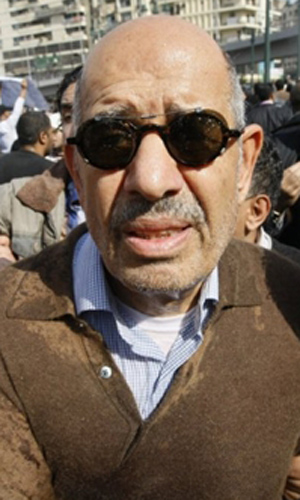
El Baradei in bed with the Muslim Brotherhood


CAROLINE GLICK TODAY VIA HOT AIR:
Caroline Glick

Elbaradei’s support for the Iranian ayatollahs is matched by his support for the Muslim Brotherhood. This group, which forms the largest and best organized opposition movement to the Mubarak regime is the progenitor of Hamas and al Qaida. It seeks Egypt’s transformation into an Islamic regime that will stand at the forefront of the global jihad. In recent years, the Muslim Brotherhood has been increasingly drawn into the Iranian nexus along with Hamas. Muslim Brotherhood attorneys represented Hizbullah terrorists arrested in Egypt in 2009 for plotting to conduct spectacular attacks aimed at destroying the regime.

Elbaradei has been a strong champion of the Muslim Brotherhood. Just this week he gave an interview to Der Spiegel defending the jihadist movement. As he put it, “We should stop demonizing the Muslim Brotherhood. …[T]hey have not committed any acts of violence in five decades. They too want change. If we want democracy and freedom, we have to include them instead of marginalizing them.”

THE ASTUTE BLOGGERS:

2 YEARS AGO:

Sunday, December 06, 2009

EL BARADEI PROMOTING REFORMS WHICH WOULD AIDE MUSLIM BROTHERHOOD IN EGYPT
REGARDLESS OF WHETHER HE'S A LEFTIST DUPE OR A CRYPTO-ISLAMIST, THE RESULT OF THE "REFORMS" EL BARADEI ADVOCATES WOULD BE THE SAME: STRENGTHENING THE MUSLIM BROTHERHOOD.

WHAT EGYPT REALLY NEEDS IS MORE RELIGIOUS FREEDOM FOR CHRISTIANS AND LESS ISLAMISM.
  • EL BARADEI DID NOTHING TO REDUCE THE THREAT OF IRAN'S SHIA NUKES OR NORTH KOREA'S COMMIE NUKES.
  • THE WORLD IS LESS SAFE NOW THEN WHEN HE TOOK OVER THE IAEA.
  • THE ONLY MAJOR STRIDES MADE TO HALT ROGUE NUKES WERE MADE BY BLAIR AND BUSH - DETHRONING SADDAM AND DEFANGING GADDAFY AND UNCOVERING THE PAK' NUKE SMUGGLING OPERATION.
  • EL BARADEI SHOULD NOT BE REWARDED WITH ANY DISTINGUISHED OR CRITICAL POST ANYWHERE.
THE ASTUTE BLOGGERS 7 MONTHS AGO:

Thursday, June 03, 2010

SURPRISE! SURPRISE: MUSLIM BROTHERHOOD BACKS EL BARADEI - IRAN'S IAEA ENABLER - TO CHALLENGE MUBARAK

Muslim Brotherhood says it will back ElBaradei campaign

Egypt's biggest opposition group has said it will back the former UN atomic watchdog chief Mohamed ElBaradei's political change campaign, reports say.

The Muslim Brotherhood failed to win any seats in elections to the upper legislative house on Wednesday.

It alleged the vote for the Shura Council had been rigged.

Mr ElBaradei has launched a campaign for political change in Egypt, but has not officially declared he will contest elections next year.

The Muslim Brotherhood said it would help Mr ElBaradei collect signatures in his efforts to gather a million names to demand changes to the constitution and emergency laws, news agency Reuters said.

IT TOOK VIOLENCE - AND APPEASEMENT FROM LIBERAL JIMMY CARTER - FOR THE JIHAD TO TAKEOVER THE SHAH'S IRAN IN 1979.

IN TURKEY, THE AKP DID IT BY STEALTH AT ELECTIONS AND IN JUDICIAL AND MILITARY PURGES OVER 8 YEARS.

IT LOOKS LIKE THE MUSLIM BROTHERHOOD WILL TRY THE AKP ROUTE... WITH THE HELP OF EL BARADEI, THE FELLA WHO RAN THE IAEA AND LET NORTH KOREA AND IRAN AND LIBYA AND SYRIA ( THE OLD AXIS OF EVIL! THE NEW ONE INCLUDES TURKEY!) GET AWAY WITH "MURDER".

THE MUSLIM BROTHERHOOD KNOWS THIS MAN WELL.

AND ANYONE WHO CONTINUES TO THINK EL BARADEI IS PRO-WEST OUGHT TO HAVE HIS HEAD EXAMINED.


STAY TUNED...
AGAIN THAT MONTH!:

Saturday, June 26, 2010

EL BARADEI AGITATING AGAINST MUBARAK GOVERNMENT
EL BARADEI - WHO AS HEAD OF THE UN'S IAEA SPENT YEARS ENABLING IRAN'S NUKE PROGRAM AND ATTACKING THE USA - MIGHT AS WELL ANNOUNCE HE'S PART OF THE GLOBAL JIHAD: NOW HE'S ACTIVELY PROTESTING MUBARAK, OUR 2ND BEST ALLY IN THE MIDDLE EAST.

(THE MUSLIM BROTHERHOOD HAS ALREADY ENDORSED HIM TO RUN AGAINST MUBARAK - AND HE ENDORSED THEM.)


ElBaradei: friend of the Muslim Brotherhood

http://pajamasmedia.com/tatler/2011/01/28/elbaradei-friend-of-the-muslim-brotherhood/

terça-feira, 25 de janeiro de 2011

The Rabin Myth

"We have signed a treaty with death, and made a contract with the grave." --- Isaiah 28, 15


"Stop being afraid. There is no danger that these guns will be used against us. The purpose of this ammunition for the Palestinian police is to be used in their vigilant fight against the Hamas. They won't dream of using it against us, since they know very well that if they use these guns against us once, at that moment the Oslo Accord will be annulled and the IDF will return to all the places that have been given to them. The Oslo Accord, despite what the opposition claims, is not irrevocable."
--Yitzhak Rabin-- One of the Oslo Accord Sponsors


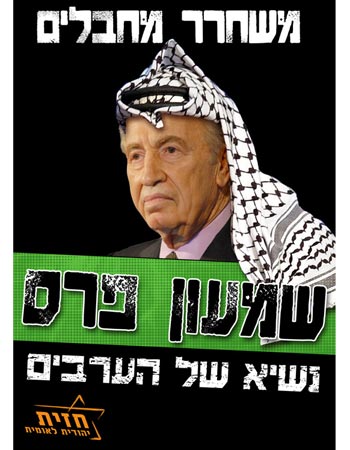
Israeli Poster:

“Releaser of Terrorists” (Top Line); “Shimon Peres” (Middle Line); “President of the Arabs” (Bottom Line) . . .


BY Ben Shapiro
November 5, 2003

Eight years ago this week, the fate of Israel was sealed. On Nov. 4, 1995, Prime Minister Yitzhak Rabin was assassinated by Yigal Amir. The murder was tragic, not just because Rabin suffered an untimely death but because Rabin became sacrosanct. The illusory image of Rabin as the tough sabra willing to negotiate with the Arabs, as the invincible general turned peacemaker, as the tolerant, wise leader of the Jewish state, was forever enshrined in the public consciousness. Rabin's political inheritance, the Oslo Accords, became unassailable.

On the anniversary of his death, it is now more necessary than ever to explode the myth of Yitzhak Rabin. As long as Rabin's myth exists, it will be impossible to move beyond his failed policies: negotiation with terror, persecution of the Israeli right wing, apologies for Jewish existence. Rabin was no "great general." As Uri Milstein's "The Rabin File" explains, Yitzhak Rabin bears responsibility for many of the most fouled-up military operations in Israeli history. On Dec. 9, 1947, during the War of Independence, Rabin took charge of the Jerusalem sector of the Palmach (the elite striking force of the Haganah, precursor to the Israeli Defense Force). Rabin's task was to secure Jerusalem and access to the city. Under his watch, Israeli forces met with disaster after disaster. The substantial losses incurred by Rabin's soldiers led the United States to withdraw support for the establishment of the Jewish state on March 19. Rabin's military record extends beyond incompetence. The celebrated soldier actually fled the field of battle in 1948. On April 20, a food and supply convoy set out for Jerusalem. The area fell under Rabin's jurisdiction. His forces failed to secure the road, and the convoy was ambushed. When the ambush occurred, several officers attempted to lead counterattacks; Rabin did not. Instead, he personally drove away for reinforcements. After requesting reinforcements, Rabin did not return to fight with his men -- he went to sleep.

One of Rabin's proudest military moments came on June 22, 1948. Menachem Begin's Irgun, another Israeli military group, was in the midst of negotiating a pact with David Ben-Gurion under which Irgun would join the new Israeli Defense Force. Meanwhile, the Irgun had loaded a ship, the Altalena, with weapons and Jewish fighters (many of them Holocaust survivors) to join the IDF. Ben-Gurion ordered that the Altalena be fired upon. Rabin carried out his orders to the letter. Later, Rabin bragged how he had "bumped them off on the deck of the burning ship and while they were trying to swim to safety." Sixteen Jews were killed, many shot while swimming to shore.

So much for the "great general." More importantly, however, Rabin's true political legacy -- the diabolical "peace process" -- must be exposed. Before his election in 1992, Rabin promised the Israeli public that he would never negotiate with arch-terrorist Yasser Arafat or his murderous Palestine Liberation Organization. Yet before the Israeli elections, in May 1992, eight Labor Party members, led by master-appeaser Yossi Beilin, met with Abu Mazen (then the head of the PLO "political wing") in Cairo. This was against Israeli law. According to Yehoshua HaMe'iri, a journalist then stationed in Cairo, "what was discussed was an attempt to ensure a Labor Party victory in the elections." A quid pro quo was made: Labor would work on behalf of "Palestinians" if the PLO influenced Israeli Arabs to vote Labor.

After the election, the Rabin government immediately cracked down on Israelis opposing the Oslo Accords. Moshe Feiglin, now the head of the Manhigut Yehudit block within Likud, organized peaceful mass protests. Rabin retaliated by putting Feiglin on trial for "raising fear among the public." At future protests, the Israeli police were used as a political organization, blocking protesters and sometimes assaulting them. It is vital to remember that before Rabin's murder, his peace program had been overwhelmingly rejected by the Israeli public. By April 1994, Rabin's approval rating had dropped to 41 percent. Before his assassination, Rabin was trailing anti-Oslo Likud candidate Benjamin Netanyahu by a wide margin. Only after his murder did the public glorify Rabin.

After Rabin's death, the witch hunt shifted into high gear. The Israeli right wing found itself in a position akin to that of the American right wing after the Oklahoma City bombing. Eight years later, the madness has not ceased. The government has shut down the radio station Arutz Sheva, a right-wing news service; actions are underway to shut down Arutz Sheva's Internet site as well.

Yitzhak Rabin did not deserve to be murdered. He simply deserved to lose the public trust. He deserved to live out his life in obscurity rather than dying a martyr for a detestable cause.

sexta-feira, 21 de janeiro de 2011

Palestine Betrayed

by Efraim Karsh
Yale, 336 pp., $32.50

Reviewed by Daniel Pipes
National Review
May 17, 2010

Translations of this item:

Nakba, the Arabic word for "catastrophe," has entered the English language in reference to the Arab–Israeli conflict. As defined by the anti-Israel website The Electronic Intifada, Nakba means "the expulsion and dispossession of hundreds of thousands [of] Palestinians from their homes and land in 1948."

Those who wish Israel to disappear actively promote the Nakba narrative. For example, Nakba Day serves as a mournful Palestinian counterpart to Israel's Independence Day festivities, annually publicizing Israel's alleged sins. So established has this day become that Ban Ki-moon, secretary general of the United Nations — the very institution that created the State of Israel — has sent his support to "the Palestinian people on Nakba Day." Even Neve Shalom, a Jewish-Palestinian community in Israel claiming to be "engaged in educational work for peace, equality, and understanding between the two peoples," dutifully commemorates Nakba Day.

The Nakba ideology presents Palestinians as victims without choices and therefore without responsibility for the ills that befell them. It blames Israel alone for the Palestinian-refugee problem. This view has an intuitive appeal, for Muslim and Christian Palestinians had long formed a majority on the land that became Israel, whereas most Jews were relative newcomers.

Intuitive sense, however, does not equal historical accuracy. In his new tour de force, Palestine Betrayed, Efraim Karsh of the University of London offers the latter. With his customary in-depth archival research — in this case, relying on masses of recently declassified documents from the period of British rule and of the first Arab–Israeli war, 1917–49 — clear presentation, and meticulous historical sensibility, Karsh argues the opposite case: that Palestinians decided their own destiny and bear near-total responsibility for becoming refugees.

In Karsh's words: "Far from being the hapless victims of a predatory Zionist assault, it was Palestinian Arab leaders who, from the early 1920s onward, and very much against the wishes of their own constituents, launched a relentless campaign to obliterate the Jewish national revival which culminated in the violent attempt to abort the U.N. partition resolution." More broadly, he observes, "there was nothing inevitable about the Palestinian–Jewish confrontation, let alone the Arab–Israeli conflict."

Yet more counterintuitively, Karsh shows that his understanding was the conventional, indeed the undisputed interpretation in the late 1940s. Only with the passage of time did "Palestinians and their Western supporters gradually rewr[i]te their national narrative," thereby making Israel into the unique culprit, the one excoriated in the United Nations, university classrooms, and editorials.

Karsh successfully makes his case by establishing two main points: that (1) the Jewish-Zionist-Israeli side perpetually sought to find a compromise while the Palestinian-Arab-Muslim side rejected nearly all deals; and (2) Arab intransigence and violence caused the self-inflicted "catastrophe."

The first point is more familiar, especially since the Oslo Accords of 1993, for it remains today's pattern. Karsh demonstrates a consistency of Jewish goodwill and Arab rejectionism going back to the Balfour Declaration and persisting throughout the period of British rule. (To remind, the Balfour Declaration of 1917 expressed London's intention to establish in Palestine a "national home for the Jewish people," and the British conquest of Palestine just 37 days later gave it control of Palestine until 1948.)

In the first years after 1917, Arab reaction was muted, as leaders and masses alike recognized the benefits of the dynamic Zionist enterprise that helped revive a backward, poor, and sparsely populated Palestine. Then emerged, with British facilitation, the noxious figure who would dominate Palestinian politics over the next three decades, Amin al-Husseini. From about 1921 on, Karsh documents, Zionists and Palestinians had many choices to make; while the former invariably opted for compromise, the latter relentlessly decided on extermination.

In various capacities — mufti, head of Islamic and political organizations, Hitler ally, hero of the Arab masses — Husseini drove his constituents to what Karsh calls "a relentless collision course with the Zionist movement." Hating Jews so maniacally that he went on to join the Nazi genocide machine, Husseini refused to accept their presence in any numbers in Palestine, much less any form of Zionist sovereignty.

From the early 1920s, then, one witnessed a pattern still in place and familiar today: Zionist accommodation, "painful concessions," and constructive efforts to bridge differences, met by Palestinian anti-Semitism, rejectionism, and violence.

Complementing this binary dramatis personae, and complicating its stark contrast, stood the generally more accommodating Palestinian masses, the disgracefully anti-Semitic British mandatory authority, a Jordanian king eager to rule the Jews as subjects, feckless Arab state leaders, and an erratic American government.

Despite the radicalization of Palestinian opinion by the mufti and despite the Nazi rise to power, Zionists kept seeking an accommodation. It took some years, but the mufti's zero-sum policy and eliminationism eventually convinced reluctant Labor leaders, including David Ben-Gurion, that good works would not facilitate their dream of acceptance. Still, despite repeated failures, they continued the search for a moderate Arab partner with whom to strike a deal.

In contrast, Ze'ev Jabotinsky, the forerunner of today's Likud party, already in 1923 understood that "there is not even the slightest hope of ever obtaining the agreement of the Arabs of the Land of Israel to 'Palestine' becoming a country with a Jewish majority." Yet even he rejected the idea of expelling Arabs and insisted on their full enfranchisement in a future Jewish state.

This dialectic culminated in November 1947, when the United Nations passed a partition plan that nowadays would be termed a two-state solution. In other words, it handed the Palestinians a state on a silver platter. Zionists rejoiced but Palestinian leaders, foremost the malign Husseini, sourly rejected any solution that endorsed Jewish autonomy. They insisted on everything and so got nothing. Had they accepted the U.N. plan, Palestine would be celebrating its 62nd anniversary this May. And there would have been no Nakba.

"Had they accepted the U.N. plan, Palestine would be celebrating its 62nd anniversary this May. And there would have been no Nakba"

The most original part of Palestine Betrayed is the half that contains a detailed review of the flight of Muslims and Christians from Palestine in the years 1947–49. Here Karsh's archival research comes into its own, allowing him to present a uniquely rich picture of the specific circumstances of Arab flight. He goes one by one through the various Arab population centers — Qastel, Deir Yassin, Tiberias, Haifa, Jaffa, Jerusalem, Safad — and then takes a close look at the villages.

Israel's war of independence divides into two parts. Ferocious fighting began within hours of the United Nations vote to partition Palestine on Nov. 29, 1947, and lasted till the eve of the British evacuation on May 14, 1948. The international conflict began on May 15 (the day after Israel came into being), when five Arab state armies invaded, with hostilities lasting until January 1949. The first phase consisted largely of guerrilla warfare, the second primarily of conventional warfare. Over half (between 300,000 and 340,000) of the 600,000 Arab refugees fled before the British evacuation, and most of them in the final month.

Palestinians fled in a wide range of circumstances and for varied reasons. Arab commanders ordered noncombatants out of the way of military maneuvers; or they threatened laggards with treatment as traitors if they stayed; or they demanded that villages be evacuated to improve their standing on the battlefield; or they promised a safe return in a matter of days. Some communities preferred to flee rather than to sign a truce with the Zionists; in the words of Jaffa's mayor, "I do not mind destruction of Jaffa if we secure destruction of Tel Aviv." The mufti's agents attacked Jews to provoke hostilities. Families with the means to do so fled danger. When agricultural tenants heard that their landlords would be punished, they worried about being expelled and preempted by abandoning the land. Bitter internecine enmities hobbled planning. Shortages of food and other necessities spread. Services like water-pumping stations were abandoned. Fears spread of Arab gunmen, as did rumors of Zionist atrocities.

In only one case (Lydda) did Israeli troops push Arabs out. The singularity of this event bears emphasis. Karsh explains about the entire first phase of fighting: "None of the 170,000–180,000 Arabs fleeing urban centers, and only a handful of the 130,000–160,000 villagers who left their homes, had been forced out by Jews."

The Palestinian leadership disapproved of a population return, seeing this as implicitly recognizing the nascent State of Israel. The Israelis were at first ready to take back the evacuees but then hardened their position as the war progressed. Prime Minister Ben-Gurion explained their thinking, on June 16, 1948: "This will be a war of life and death and [the evacuees] must not be able to return to the abandoned places. . . . We did not start the war. They made the war. Jaffa waged war on us, Haifa waged war on us, Beisan waged war on us. And I do not want them again to make war."

In sum, Karsh explains, "it was the actions of the Arab leaders that condemned hundreds of thousands of Palestinians to exile."

In this book, Karsh establishes two momentous facts: that Arabs aborted the Palestinian state and that they caused the Nakba. In the process, he confirms his status as the preeminent historian of the modern Middle East writing today, and extends the arguments of three of his earlier books. His magnum opus, Empires of the Sand: The Struggle for Mastery in the Middle East, 1789-1923 (with Inari Karsh, 1999), argued that Middle Easterners were not, as usually thought, "hapless victims of predatory imperial powers but active participants in the restructuring of their region," a shift with vast political implications. Palestine Betrayed applies that book's thesis to the Arab–Israeli conflict, depriving Palestinians of excuses and victimhood, showing that they actively, if mistakenly, chose their destiny.

In Fabricating Israeli History: The "New Historians" (1997), Karsh exposed the shoddy work, even the fraudulence, of the school of Israeli historians who blame the 1948–49 Palestinian refugee problem on the Jewish state. Palestine Betrayed offers the flip side; if the earlier book refuted mistakes, this one establishes truths. Finally, in Islamic Imperialism: A History (2006), he showed the expansionist core of the Islamic faith in action over the centuries; here he explores that drive in small-bore detail among the Palestinians, connecting the supremacist Islamic mentality with an unwillingness to make practical concessions to Jewish sovereignty.

Palestine Betrayed reframes today's Arab–Israeli debate by putting it into its proper historical context. Proving that for 90 years the Palestinian political elite has opted to reject "the Jewish national revival and [insisted on] the need for its violent destruction," Karsh correctly concludes that the conflict will end only when the Palestinians give up on their "genocidal hopes."

Mr. Pipes is a columnist for National Review Online, director of the Middle East Forum, and Taube distinguished visiting fellow at the Hoover Institution.


quinta-feira, 20 de janeiro de 2011

70% dos "palestinos" preferem viver sob controle israelense


Google Tradutor

Even in Gaza, Arabs live better than in Egypt:
"Gaza still has huge numbers of jobless people and it is poor, but it is materially better off than Arab countries like Sudan or Mauritania­. Indeed, it's probably better off than Egypt."

http://kri­stof.blogs­.nytimes.c­om/2010/07­/03/your-c­omments-on­-my-gaza-c­olumn-2/

Nicholas Kristof, 2x Pulitzer Prize winning journalist for his articles on Darfur, writing on his return from his latest trip to Gaza


The vast majority of Palestinians–70%, according to a new poll–prefer to live under Israeli rule, as opposed to Palestinian (or any other kind of Arab or Muslim) rule.

That’s because–despite the hype and overwhelming anti-Israel media and propaganda–they know the truth: their lifestyle, quality of living, degree of freedom, and ability to remain alive and in one piece are all infinitely greater under the Western, civilized Jews who run Israel than the barbarians who run every single Arab and Muslim nation, especially the savages who run HAMAS and Fatah and would be their leaders, as they are in HAMASastan/Gaza and FATAHstan/the so-called “West Bank.”

Technically, only 35% were open and honest in the survey. But another 35% refused to answer, either way, and that’s because they agree with the other 35% but know that if cousin Mohammed who heads the HAMAS block party down the street finds out they answered honestly, their heads, torsos, and limbs will end up in different locations around Ramallah, Khan Younis, and Tul Karem. Only 30% said they’d prefer Palestinian rule. And 40% of the Palestinians said that if their East Jerusalem neighborhood would become part of a Palestinian state, they’d relocate to another neighborhood if they could remain Israeli.


Arab leader wants to remain Israeli
http://www.israeltoday.co.il/default.aspx?tabid=132&view=item&idx=1667

Arab Leader Rallies for United Jerusalem
http://www.israeltoday.co.il/default.aspx?tabid=133&view=item&idx=1858

Why most Palestinian Arabs love Israel - 77% of the State of Israel's Arab citizens would rather live in the Jewish state than in any other country in the world, according to a new study titled "Coexistence in Israel".
http://fvdb.wordpress.com/2010/03/18/2174/

http://barenakedislam.wordpress.com/2010/10/04/jerusalem-arabs-who-do-not-want-to-live-under-palestinian-rule/

"The Hell of Israel Is Better than the Paradise of Arafat"
http://www.danielpipes.org/2534/the-hell-of-israel-is-better-than-the-paradise-of-arafat

segunda-feira, 17 de janeiro de 2011

THE ARABS IN THE HOLY LAND - NATIVES OR ALIENS?

Dr. Harry Mandelbaum
harrymandelbaum @ yahoo . com
  • Copying, re-publication, translation, and distribution are permitted and encouraged. There is no need to ask for permission.
  • The author thanks the readers who contributed additional information and references.
  • This article is based only on Arab, Muslim, and foreign sources. Jewish / Israeli sources were deliberately left out to avoid accusations of bias.

The latest version of this article in Hebrew הגרסה האחרונה של המאמר בעברית
http://knol.google.com/k/-/-/1mpto2qu8knp0/3

The latest version of this article in English הגרסה האחרונה של המאמר באנגלית
http://knol.google.com/k/-/-/1mpto2qu8knp0/2

See also: :ראה גם
Who Owns the Land of Israel
http://knol.google.com/k/-/-/1mpto2qu8knp0/7

The Land of Israel - History Time Line
http://knol.google.com/k/-/-/1mpto2qu8knp0/9
~~~~~~~~~~~~~~~~~~~~~~~~~~~~~~~~~~~~~~~~~~~~~~~~~~~~~~~~~~~~~~

Unknown to most of the world population, the origin of the "Palestinian" Arabs' claim to the Holy Land spans a period of a meager 30 years - a drop in the bucket compared to the thousands of years of the region's rich history.

Before the beginning of the 20th century, there were practically no Muslim Arabs in the Holy Land. In 1695 there was not a single Muslim Arab in Gaza, Nazareth, and Um-El-Phachem. All Arabs there were Christians. By contrast, the Jews, despite 2000 years of persecution and forced conversions by various conquerors, have throughout most of history been the majority population in the Holy Land. In Jerusalem Jews were always the largest demographic group [1][2], except for periods when conquerors specifically threw them out and prevented them from returning.

When General Allenby, the commander of the British military forces, conquered Palestine in 1917/1918, only a few thousand Muslim Arabs resided in the Holy Land. Most of the Arabs were Christians, and most of the Muslims in the area either came from Turkey under the Ottoman Empire, or were the descendants of Jews and Christians who were forcefully converted to Islam by the Muslim conquerors. These Muslims were not of Arab origin. Most references to Arabs in Palestine before 1917 refer to the Christian Arabs, not to the Muslims.

It is important to note that estimates and censuses conducted by the Muslim conquerors were biased. Therefore, the only reliable data is provided by non-Muslim sources. Tourists and politicians, Arabs and non-Arabs alike, have documented their observations of the population in the Holy Land beginning more that a thousand years ago. Let's start at the early days and continue into the Ottoman period:

  • The historian James Parkes wrote: "During the first century after the Arab conquest [640-740 CE], the caliph and governors of Syria and the Holy Land ruled entirely over Christian and Jewish subjects. Apart from the Bedouin in the earliest days, the only Arabs west of the Jordan were the garrisons."[3]
  • In year 985 the Arab writer Muqaddasi complained: "the mosque is empty of worshipers... The Jews constitute the majority of Jerusalem’s population" (The entire city of Jerusalem had only one mosque?). [4]
  • In 1377, Ibn Khaldun, one of the most creditable Arab historians, wrote: "Jewish sovereignty in the Land of Israel extended over 1400 years... It was the Jews who implanted the culture and customs of the permanent settlement".[5]
  • In 1695-1696, the Dutch scholar and cartographer, Adriaan Reland (Hadriani Relandi) , wrote reports about visits to the Holy Land. (There are those who claim that he did not personally visit the Holy land but collected reports from other visitors.) He was fluent in Hebrew and Arabic. He documented visits to many locations. He writes: The names of settlements were mostly Hebrew, some Greek, and some Latin-Roman. No settlement had an original Muslim-Arab name with a historical root in its location. Most of the land was empty, desolate, and the inhabitants few in number and mostly concentrated in Jerusalem, Acco, Tzfat, Jaffa, Tiberius and Gaza. Most of the inhabitants were Jews and the rest Christians. There were few Muslims, mostly nomad Bedouins. The Arabs were predominantly Christians with a tiny minority of Muslims. In Jerusalem there were approximately 5000 people, mostly Jews and some Christians. In Nazareth there were approximately 700 people - all Christians. In Gaza there were approximately 550 people - half of them Jews and half Christians. Um-El-Phachem was a village of 10 families - all Christians. The only exception was Nablus with 120 Muslims from the Natsha family and approximately 70 Shomronites.[6]
  • In 1835 Alphonse de Lamartine wrote: "Outside the city of Jerusalem, we saw no living object, heard no living sound. . .a complete eternal silence reigns in the town, in the highways, in the country."[7]
  • In 1844, William Thackeray writes about the road from Jaffa to Jerusalem: "Now the district is quite deserted, and you ride among what seem to be so many petrified waterfalls. We saw no animals moving among the stony brakes; scarcely even a dozen little birds in the whole course of the ride."[8]
  • In 1857, the British consul in Palestine, James Finn, reported: "The country is in a considerable degree empty of inhabitants and therefore its greatest need is that of a body of population."[9]
  • In 1866, W.M. Thomson writes: "How melancholy is this utter desolation. Not a house, not a trace of inhabitants, not even shepherds, to relieve the dull monotony ... Much of the country through which we have been rambling for a week appears never to have been inhabited, or even cultivated; and there are other parts, you say, still more barren."[10]
  • In 1867, Charles Wyllys Elliott, president of Harvard University, wrote: "A beautiful sea lies unbosomed among the Galilean hills, in the midst of that land once possessed by Zebulon and Naphtali, Asher and Dan ... Life here was once idyllic, charming ... It was a world of ease, simplicity, and beauty; now it is a scene of desolation and misery."[30]
  • In 1867, Mark Twain - Samuel Clemens, the famous author of "Huckleberry Finn" and "Tom Sawyer", toured the Holy Land. This is how he described the land: "There is not a solitary village throughout its whole extent - not for thirty miles in either direction. There are two or three small clusters of Bedouin tents, but not a single permanent habitation. One may ride ten miles, hereabouts, and not see ten human beings. ... No man can stand here by deserted Ain Mellahah and say the prophecy ["and your land shall be desolate and your cities waste"] has not been fulfilled ... We had left Capernaum behind us. It was only a shapeless ruin. It bore no semblance to a town, and had nothing about it to suggest that it had ever been a town ... These unpeopled deserts, these rusty mounds of barrenness... A desolate country whose soil is rich enough but is given over wholly to weeds. A silent, mournful expanse... the country is infested with fierce Bedouins, whose sole happiness it is, in this life, to cut and stab and mangle and murder unoffending Christians. Allah be with us! ... A desolation is here that not even imagination can grace with the pomp of life and action. We reached Tabor safely. We never saw a human being on the whole route ... After a while we came to a shapeless mass of ruins, which still bears the name of Bethel. There was hardly a tree or a shrub anywhere. Even the olive and the cactus, those fast friends of a worthless soil, had almost deserted the country... No landscape exists that is more tiresome to the eye than that which bounds the approaches to Jerusalem.... we were marching down a close, flaming, rugged, desolate defile, where no living creature could enjoy life, except, perhaps, a salamander. It was such a dreary, repulsive, horrible solitude! ... Ancient Jericho is not very picturesque as a ruin... The journey to the Dead Sea, the Jordan and Bethlehem was short, but it was an exhausting one. Such roasting heat, such oppressive solitude, and such dismal desolation can not surely exist elsewhere on earth... Of all the lands there are for dismal scenery, I think Palestine must be the prince....It is a hopeless, dreary, heart-broken land... I would like much to see the fringes of the Jordan in spring-time, and Shechem, Esdraelon, Ajalon and the borders of Galilee--but even then these spots would seem mere toy gardens set at wide intervals in the waste of a limitless desolation. Palestine sits in sackcloth and ashes. ... one finds only a squalid camp of fantastic Bedouins of the desert... Nazareth is forlorn... Jericho the accursed, lies a moldering ruin, ... Bethlehem and Bethany, in their poverty and their humiliation, ... is untenanted by any living creature... Renowned Jerusalem itself, the stateliest name in history, has lost all its ancient grandeur, and is become a pauper village... The noted Sea of Galilee ... was long ago deserted ... Capernaum is a shapeless ruin; Magdala is the home of beggared Arabs; Bethsaida and Chorazin have vanished from the earth... a solitude that is inhabited only by birds of prey and skulking foxes. Palestine is desolate and unlovely."[11]
  • In 1874, Reverend Samuel Manning wrote: "But where were the inhabitants? This fertile plain, which might support an immense population, is almost a solitude.... Day by day we were to learn afresh the lesson now forced upon us, that the denunciations of ancient prophecy have been fulfilled to the very letter -- "the land is left void and desolate and without inhabitants." (Jeremiah, ch.44 v.22)[12]
  • In 1881, the British cartographer Arthur Penrhyn Stanley wrote: "In Judea it is hardly an exaggeration to say that for miles and miles there was no appearance of life or habitation."
  • In 1892, B. W. Johnson writes: "In the portion of the plain between Mount Carmel and Jaffa one sees but rarely a village or other sights of human life... A ride of half an hour more brought us to the ruins of the ancient city of Cæsarea, once a city of two hundred thousand inhabitants, and the Roman capital of Palestine, but now entirely deserted... I laid upon my couch at night, to listen to the moaning of the waves and to think of the desolation around us."[13]
  • In 1913, a British report, by the Palestinian Royal Commission, quotes an account of the conditions on the coastal plain along the Mediterranean Sea: "The road leading from Gaza to the north was only a summer track, suitable for transport by camels or carts. No orange groves, orchards or vineyards were to be seen until one reached the [Jewish] Yabna village. Houses were mud. Schools did not exist. The western part toward the sea was almost a desert. The villages in this area were few and thinly populated. Many villages were deserted by their inhabitants."

As we can see, throughout history, as documented by Arab historians and by foreign observers before 1917, the land was desolate; there were practically no Muslim Arabs in the cities outside of Jerusalem (except 120 Muslims in Nablus); and the number of Muslim Arabs (other than Ottoman Muslims or Christian Arabs) was minuscule, most of them nomadic Bedouins. In 1695 there was not a single Muslim Arab in Gaza, Nazareth, and Um-El-Phachem. All Arabs there were Christians. The difference between these multiple authentic accounts and the falsified Muslim-Arab propaganda is huge, almost beyond imagination.

Mark Twain's description of the Holy Land has been the target of severe Muslim criticism. However, earlier and later visitors to the Holy Land all give the same description of desolation, misery, and lack of inhabitants, thus confirming Mark Twain's observations.

Neville Chamberlain, in a speech given at the Alexandra Theatre, Birmingham, 13 Oct. 1918, said: "A great responsibility will rest upon the Zionists, who before long will be proceeding with joy in their hearts to the ancient seat of their people. Theirs will be the task to build up a new prosperity and a new civilization in old Palestine, so long neglected and misruled. They will carry with them the hearty goodwill of the British nation and its earnest hope that in their own country they may prove worthy of their past and of the great opportunity that has been given to them."

When the Holy Land was taken from the Ottomans by the British, it was no longer under Muslim control.
The Quran commands Muslims to take land away from non-Muslims, including land which they have never trodden on before[14]. Following the British conquest of the Holy land, the Muslim Arabs embarked on a massive immigration into the Holy Land, fulfilling their religious obligation to capture as much foreign land as possible. The following accounts describe the massive Arab immigration after 1918:

  • In 1930/31, Lewis French, the British Director of Development wrote about the Arabs in Palestine: "We found it inhabited by fellahin (Arab farmers) who lived in mud hovels and suffered severely from the prevalent malaria... Large areas were uncultivated... The fellahin, if not themselves cattle thieves, were always ready to harbor these and other criminals. The individual plots changed hands annually. There was little public security, and the fellahin's lot was an alternation of pillage and blackmail by their neighbors, the bedouin (Arab nomads)."
  • The British Hope-Simpson Commission recommended, in 1930, "Prevention of illicit immigration" to stop the illegal Arab immigration from neighboring Arab countries.[15]
  • The British Governor of the Sinai (1922-36) reported in the Palestine Royal Commission Report: "This illegal immigration was not only going on from the Sinai, but also from Transjordan and Syria."
  • The governor of the Syrian district of Hauran, Tewfik Bey El Hurani, admitted in 1934 that in a single period of only a few months over 30,000 Syrians from Houran had moved to Palestine.
  • British Prime Minister Winston Churchill noted the Arab influx. Churchill, a veteran of the early years of the British mandate in the Holy Land, noted in 1939 that “far from being persecuted, the Arabs have crowded into the country and multiplied till their population has increased more than even all world Jewry could lift up the Jewish population.

The Arab population in the Holy Land increased only because of their massive immigration from neighboring Arab countries. Before 1918, when the Arab immigration started, only a minuscule number of Muslim Arabs lived in the Holy Land, practically all of them in Jerusalem. This is why it is so difficult to find an old-age Muslim-Arab whose grandparents were born in the Holy Land.
Muslim-Arab population [1][2] and growth in Jerusalem before and after 1918.
The break point between the two straight lines shows the exact point in time
when the massive Arab immigration into the Holy Land started.

While the Holy Land was ruled by the Muslim Ottomans, despite large waves of Jewish Zionist immigration, there were practically no conflicts between the Jews and the few local Arabs. Jews and local Arabs lived peacefully together. This peaceful co-existence ended after 1918, when the large waves of foreign Muslim-Arab immigration started, following the British conquest. Up until 1948 the British restricted Jewish immigration and encouraged Muslim-Arab immigration. It is the landless foreign Muslim-Arabs who immigrated after 1918 that started the conflict, NOT the zionistic Jewish immigration between 1881-1914, which was a peaceful period. For example, in 1929, the Hebron Massacre of the local Jews was done by foreign Arabs, not by the established local families who lived there and even tried to defend the Jews.

The Quran explicitly encourages lying and deception if it helps Muslims achieve a desired goal [16][17][18][19]. To deny the massive invasion of the Holy Land by foreign Muslims, the falsified Muslim-Arab propaganda claims that it is a myth. If it is indeed a myth, how can anyone explain the following simple observations?

  • The grandparents of the author's wife were born in the Holy Land in the 19th century. They saw with their own eyes how empty the land was at the time. They also lived through and experienced first-hand the British conquest and the Arab's massive invasion of the land that started in 1918. This invasion lasted for only 30 years, and ended in 1948 with the evacuation of the British from the land and the declaration of the state of Israel.
  • One of the readers of an earlier version of this article sent the author a similar description by his grandfather. His grandfather was one of the founders of Petach Tikvah (in 1878). The grandfather described to his children and grandchildren how empty and desolate the land used to be. Arabs started immigrating to the Holy Land with the hope of finding employment in the new Jewish villages.
  • The family names of many Arabs who now occupy the Holy Land reveal their country of origin: Masri (from Egypt ), Iraqi (from Iraq), Tarabulsi (from Tarabulus-Tripoli in Lebanon), Hourani (from Houran in Syria), Husseini (from Jordan), and Saudi (from Saudi Arabia).
  • Following the publication of an earlier version of this article, the author received an email message from a reader who used to work with Arabs in Gaza and in various villages in the West Bank in the 1970's. In his email the reader describes friendly discussions about family history with his Arab co-workers. Most of the co-workers had grandfathers who immigrated to the Holy Land from neighboring countries.
When Churchill said that “the Arabs have crowded into the country and multiplied till their population has increased more than even all world Jewry could lift up the Jewish population.” was he lying? Churchill was not a Muslim...

The name "Palestina" is a Latin-Roman name based on the Hebrew Biblical name of the ancient "Philistines" -- "Plishtim" in Hebrew. The translation of this name to English is: "invaders". The Philistines arrived from the Mediterranean islands near Greece and invaded the land about 4000 years ago . The Philistines are extinct since approximately 2000 years ago, and have no ancestral or historical relationship to Arabs. Before 1917, during the 400-years rule of the Ottoman empire, the Ottomans did not call the Holy Land "Palestina". The British decided to renew this ancient name and called the land "Palestine". The local Arabs never called themselves "Palestinians", not even during the British mandate. Both Arab and British leaders referred to them only as "Arabs". For example: The Hope-Simpson report[15] published by the British in 1930, contains the phrase "the number of Palestinian unemployed, whether Arab, Jew or other...". "Palestinian" was used only as an adjective in reference to the location and also included Jews. The Arab inhabitants were always referred to as "Arabs". The word "palestinians" does not appear anywhere in this report. "Palestinian Arabs", "Palestinian Jews", and "Palestinian Christians" were common terms. But, "Palestinians", as a noun, before 1948, was not yet invented.

After 30 years of invasion, following the end of the British mandate and the declaration of the state of Israel in 1948, the Arabs recognized the fact that they invaded foreign land and invented for themselves a name in English -- "Palestinians". If the British were to call the land "New England", and the local Arabs were to call themselves "English" would they automatically become English? It is important to emphasize that the concept of a "Palestinian" to describe the local Arab residents was invented by the Arabs AFTER the declaration of the state of Israel. This group of Arabs, who started calling themselves "the Palestinian nation" after 1948, does not have an original name in their native Arabic language.

Is there any nation in the world which does not have a name in its original native language? The Arabs who invaded the Holy Land do not have a name in their native Arabic language because they are not, and have never been, a unified group or a nation. Most of those Arabs cannot even pronounce the word "Palestinian". They pronounce it "Falestinian".

Historically, a "Falestinian" people never existed. The fact is that the Arabs, who now try to call themselves by the English name "Palestinians" and mis-pronounce it "Falestinians", don't even know what their name is in Arabic. Even Arab leaders and historians have admitted that a "Palestinian" people never existed. For example:

  • In 1937, the Arab leader Auni Bey Abdul Hadi told the Peel Commission: "There is no such country as Palestine. Palestine is a term the Zionists invented. Palestine is alien to us."
  • In 1946, Princeton's Arab professor of Middle East history, Philip Hitti, told the Anglo-American Committee of Inquiry: "It's common knowledge, there is no such thing as Palestine in history."
  • In March 1977, Zahir Muhsein, an executive member of the Palestinian Liberation Organization (PLO), said in an interview to the Dutch newspaper Trouw: "The 'Palestinian people' does not exist. The creation of a Palestinian state is only a means for continuing our struggle against the state of Israel."
  • Joseph Farah, an Arab-American journalist, writes: "The truth is that Palestine is no more real than Never-Never Land. Palestine has never existed as an autonomous entity."
  • Walid Shoebat, a former PLO terrorist acknowledged the lie he was fighting for: “Why is it that on June 4th 1967 I was a Jordanian and overnight I became a Palestinian? ... we considered ourselves Jordanian until the Jews returned to Jerusalem. Then all of the sudden we were Palestinians. They removed the star from the Jordanian flag and all at once we had a Palestinian flag.”
  • The Syrian dictator Hafez Assad said: "There is no such thing as a Palestinian people, there is no Palestinian entity".
  • Dr. Azmi Bishara, a notable leader of the Arabs in Israel, who fought against the Israeli "occupation", said in a TV interview[20]: "There is no Palestinian nation. It's a colonial invention. When were there any Palestinians?" To see a clip of the interview click here.
The Arabs who now claim to be natives of the Holy Land have migrated to Palestine and invaded the land after 1917, from neighboring Arab countries, predominantly from areas now known as Egypt, Jordan, Syria, Lebanon, Kuwait, Saudi Arabia, and Iraq. None of these countries existed as nations prior to 1913. They were nothing but a disorganized collection of tribes, constantly terrorizing each other, trying to seize land from their neighbors. Unfortunately, those Arab invaders, imported into the Holy Land their age-old "culture" of terrorizing neighbors to seize land. Many of them were social outcasts and criminals who could not find jobs in their own countries so they searched for their luck elsewhere. Some of them were accepted by the British regime as a source of cheap labor and were allowed to settle on unoccupied Jewish land. Even Yassir Arafat, the leader of the PLO, is not a native of the Holy Land. He called himself a "Palestinian refugee" but spoke Arabic with an Egyptian dialect. He was born in 1929 in Cairo, Egypt. He served in the Egyptian army, studied in the University of Cairo, and lived in Cairo until 1956. He then moved to Saudi-Arabia and founded the Al-Fatah terror organization, the precursor to the PLO, in Kuwait in 1958, together with his Saudi-Arabian friends. How exactly does that constitute a "Palestinian refugee"? Being born in 1929 in Cairo, he cannot even be considered a son of Palestinian refugees (there were no refugees in 1929). Arafat must have been a good student of Muhammad, the founder of the Muslim religion, who said in the Quran: "War is deception".[16]

In their propaganda, the Arabs who now call themselves "Palestinians" consistently demand that Israel and the world recognize their "pre-1948" rights. That's about 60 years ago. Mysteriously, they are never willing to add another 60 years to their "historical" claims on the Holy Land. They know very well that doing so will send them back to where they came from - Jordan, Syria, Egypt, Lebanon, Kuwait, Saudi Arabia, and Iraq. Years ago, during negotiations with the, so-called, "Palestinians", a Israeli negotiator proposed to revise a mention of their claim of "pre-1948" rights and replace it with "pre-1917". The "Palestinians" vehemently opposed. Now we know why.

If there is anyone who still believes that a "Palestinian" nation ever existed before the end of the British mandate and the founding of the state of Israel, would they please be kind enough to answer when was it founded and by whom? What was its name in Arabic (not in Latin-English)? What was its form of government? What were its borders? Name one top "Palestinian" leader before Arafat? Which country ever recognized its existence and when? In which library or museum can we find any of its literature, coins, or historical artifacts? The answer to all these questions is "nil". As stated by Zahir Muhsein: "The 'Palestinian' people does not exist."

Some Arabs consider themselves the descendants of Abraham, the forefather of the Jewish nation. Ironically, if not for Muhammad's study of the Bible, the Arabs would not have known of the existence of Abraham. Muhammad invented the Muslim religion in the 7th century AD, in Saudi Arabia. He studied the Bible in order to be better equipped in his attempts to persuade the Jews to follow his newly invented religion. When the Jews refused, he dictated the stories of the Quran (the Muslim bible) to his students, and filled it with his own imaginary accounts of Biblical events. (Muhammad himself did not know how to read or write.) He even took the liberty to change the God-given day of rest, Saturday - the Sabbath. Since Sunday was already taken by the Christians, he picked Friday as the next-best Muslim day of rest.

Muhammad never visited Jerusalem and the Holy Land, and did not consider them important enough to mention their name in the Quran even once. By comparison, Mecca and Medina, the only two Muslim holy cities, are mentioned in the Quran hundreds of times. Even though the name of the Holy Land is not mentioned in the Quran, the Quran refers to the Holy Land many times as the land of the children of Israel.[21] [22] [23][24].

The Jewish Holy Temple stood on Temple Mount long before the Muslim religion, or any other current world religion was conceived. Even when the founders of the Christian religion walked around in the streets of ancient Jerusalem there were no mosques nor churches there - only the Jewish Holy Temple and nothing else. The land of the Jewish Holy Temple in Jerusalem was purchased by King David, for the Jewish people, approximately 850 years BCE. The deed, the name of the previous owner, and the purchase price were recorded in the Bible (See Samuel-B Ch. 24 and Chronicles-A Ch. 21-22).

Today the Muslim "Palestinians" claim to own Temple Mount, the site of the Jewish Holy Temple in Jerusalem. They claim it is "their" holy site. Does anyone in the rest of the world know which way the Muslims in Jerusalem face when they pray? When the Muslims in Jerusalem pray in their mosques, even in the "Al Aktza" mosque built on the edge of Temple Mount, they face their holy city Mecca and stand with their back turned to Temple Mount. And, when they bow down in their prayers they show their behind to the site of the Holy Temple. How consistent is that with considering it a Muslim holy site?


Muslims praying on Temple Mount towards Mecca point their behind to the site of the Holy Temple.
(Photos courtesy imageshack.us and corbis
)

The Muslims have long ago recognized that the Holy Temple is a Jewish holy site. Its name in Arabic is "Al Quds" - "The Holiness" in English, which is an abbreviation for "The House of Holiness" - The Jewish Holy Temple. The fact is that Jerusalem is not important enough to the Muslims to be mentioned even once in the Quran, while Mecca and Medina, the only two Muslim holy cities, are mentioned hundreds of times. Even when the Jordanians occupied Jerusalem, up until 1967, they never considered it their capital, and Arab leaders did not come to visit.

Can any Muslim in the world produce any credible evidence for their connection to this holy site, other than in Muhammad's dream? Believe it or not, the one and only source for the Muslims' claim to Jerusalem and the site of the Holy Temple, is a mention in the Quran of a dream that Muhammad had about an unknown "far distant place of worship (mosque)"[25]. This "far distant place of worship" could not have been in Jerusalem, because in Muhammad's time there was no worship taking place at the site of the Holy Temple and there was not even a single mosque in Jerusalem. The first mosque in Jerusalem was built 83 years after Muhammad died. Perhaps this "far distant place of worship" is the site of the Vatican in Italy?

The best reference for understanding the Muslim-Arab mentality and politically-motivated falsification of history is Muhammad's own advice to his followers: "War is deception"[16][17][18][19].

The real problem facing those Arabs today is not the lack of a homeland. The historical root-cause of their problem and frustration is the fact that the countries they came from have not agreed to accept them back in. This is why so many of them live, up until today, in refugee camps, in neighboring Arab countries, lacking fundamental civil rights. In their frustration they feel that the only hope and choice they have is to try and steal a country. Many of the vehicles and the agricultural equipment in the Palestinian Authority have been stolen from their Israeli neighbors. For a while, Israel suffered the highest rate of automobile thefts in the world! Most of these stolen vehicles were later found in towns and villages of the Palestinian Authority. If invading foreign land is so easy; if stealing vehicles is so easy; why not try and steal a country too?

There is only one possible solution to the "Palestinians" desire for a homeland. It is the only solution that will satisfy their claim of the right to return to their homeland. Since helping them return to where they lived for less than 30 years is their own definition of justice, then helping them return to where they lived earlier for hundreds or thousands of years is, by the same definition, a better justice. Let's all help them get the better justice they deserve. Let's help them return to where they came from - Egypt, Jordan, Syria, Lebanon, Kuwait, Saudi Arabia, and Iraq.

Recent proposals have suggested a two-state solution to the Israeli-Arab conflict - one for the Jews and one for the Arabs. The map below shows that a much more generous solution already exists - 21 states - one for the Jews and twenty for the Arabs.


The 21-state solution proposal infuriated some Arabs. This is not the solution they wanted. They wanted negotiations leading to a compromise over how much of the Land of Israel they can get.

Imagine that, while you are away on vacation, your neighbor invades your home and settles there. When you come back, you ask him to leave. He says: "I entered an empty building. It is my home." You say: "This is my home, get out of here." To avoid escalating the situation, your neighbor proposes a compromise: "You get half the building and I get half the building." How would you respond?

The Quran contains more than 100 verses commanding Muslims to fight a war against non-Muslims[26]. Some verses command Muslims to chop off heads and fingers and terrorize and kill non-Muslims[27]. Other verses command Muslims to take land away from non-Muslims[14]. Muslims are also prohibited from living in peace with non-Muslims on non-Muslim land[28]. Anyone who avoids fighting against non-Muslims is punished. Because of such religious commandments, there is no chance and no hope that Muslims will ever live peacefully together with non-Muslims who live on non-Muslim land. Temporary periods of calm are nothing but a waiting period - waiting in ambush - waiting for an opportunity to strike[29].

During the rise of Islam, Muhammad tried to convert the Jews of Medina to Islam. When they refused, he murdered them. The Muslims who conquered northern Africa during the 7th and 8th centuries, did the same. Only those who converted to Islam, or managed to hide, survived. Jews who refused to convert were massacred. In Morocco, in the 8th century, whole communities were wiped out by Muslim ruler Idris ibn Abdullah. Even as late as the 19th century, In Morocco, more than 300,000 Jews were murdered between 1864 and 1880 - their only offense being their refusal to convert to Islam.

History proves that a population exchange is the only possible solution, other than war, to conflicts between Muslims and non-Muslims. For example, in 1923, the war between Turkey and Greece ended only when both sides agreed to a population exchange of more than two million Muslims and Greek-Orthodox Christians. Similarly, in 1947, more than 14 million Muslims, Hindus, and Sikhs, have exchanged locations in India, Pakistan, and Bangladesh.

About 820,000 Jewish refugees have relocated out of the Arab countries; about 560,000 of them moved to Israel and 260,000 moved to other countries. The number of Jewish refugees who relocated out of Arab countries, is a little larger than the total number of Arabs who lived in the Holy Land in 1947. Between 472,000 and 650,000 Arabs, who invaded the Holy Land during the past 30 years, returned to their neighboring Arab countries, while 160,000 remained in the State of Israel after 1948 [31]. Now it is time to end the conflict between Jews and Muslims in Israel. The only possible peaceful solution is to complete the second half of this Jewish-Muslim population exchange by returning the remaining Muslims in the Holy Land back to the Arab-Muslim countries where they came from. As we can see in the map above, there is no shortage of space in the Arab-Muslim countries.

References

  1. A) Jerusalem population estimate of Dr. Schultze, Prussian consul in 1845: 7,120 Jews, 5,000 Muslims, 3,390 Christians, 800 Turkish soldiers and 100 Europeans. B) "The sedentary population of Jerusalem numbers about 15,500 souls, of whom 4,000 are Mussulmans (Muslims) and 8,000 Jews. The Mussulmans forming about a fourth part of the whole, and consisting of Turks, Arabs, and Moors..." (Karl Marks, new York Daily Tribune, 15 April 1854). C) Population estimate of 1868 in the Jerusalem Almanack: 9,000 Jews, 5,000 Muslims, 4,000 Christians . D) Population, Ottoman subjects 1905: 40,000 Jews, 10,900 Christian Arabs, 8,000 Muslim Arabs. Total Population 58,900. By 1914 the Jewish population was 45,000. E) "Out of about 60,000 inhabitants some 40,000 are jews." (Miss Freer, Inner Jerusalem, 1907). All are quoted in: "Jerusalem: Illustrated History Atlas", Martin Gilbert, Macmillan Publishing, New York, 1978
    http://www.scribd.com/doc/19551586/JERUSALEM-Illustrated-History
  2. Focus on Jerusalem Prophecy Ministry, by Darrell G. Young. Muslim population numbers and growth are consistent with Ref. [1] above and follow the exact same pattern.
    http://focusonjerusalem.com/jerusalempopchart.html
  3. James Parkes, "Whose Land? A History of the Peoples of Palestine"(Harmondsworth, Great Britain: 1970), p.66.
  4. Muqaddasi, quoted by Erich Kahler who cites this statement from Knowlege of Crimes, p.167, in The Jews Among the Nations (New York: F. Ungar, 1967), p. 144.
  5. Ibn Khaldun, quoted by Yahya Armajami, Middle East Past and Present (Englewood Cliffs, NJ: Prentice-Hall, 1970), p. 143.
  6. Hadriani Relandi, "Palaestina ex monumentis veteribus illustrate" written in Latin, Published in 1714, Utrecht, ex libraria Guilielmi Broedelet (Trajecti Batavorum)
  7. Alphonse de Lamartine, "Recollections of the East", Vol. 1 (London 1845) p.268
  8. William Thackeray, "From Jaffa To Jerusalem" (1844)
  9. James Finn, British Foreign Office Documents 78/1294, Pol. No. 36
  10. W.M. Thomson, "The Land and the Book" (London: T. Nelsons & Sons, 1866); and "Southern Palestine and Jerusalem" (1882).
  11. Mark Twain, "The Innocents Abroad" (American Pub. Co., 1869)
    http://www.gutenberg.org/files/3176/3176.txt
  12. Reverend Samuel Manning, "Those Holy Fields" (London, 1874), pp.14-17
  13. B. W. Johnson, "Young Folks in Bible Lands": Chapter IV, (1892)
  14. "And He made you heirs to their land and their dwellings and their property, and to a land which you have not yet trodden." (Quran 33:27). "See they not that we gradually reduce the land (in their control) from its outlying borders?" (Quran 13:41).
  15. The Hope-Simpson report, (London 1930)
    http://www.jewishvirtuallibrary.org/jsource/History/Hope_Simpson.html
  16. "Muhammad said: '... for war is deception.' " (Tabari 8:23) . "Allah's Apostle said, 'War is deceit.' '"(Sahih Bukhari:4.268). "When the Prophet (peace be upon him) intended to go on an expedition, he always pretended to be going somewhere else, and he would say: War is deception.". (Sunan of Abu-Dawood Hadith 2631 Narrated by Ka'b ibn Malik). "war is deception" (Ahmad, 6.459).
  17. http://www.islam-watch.org/Warner/Taqiyya-Islamic-Principle-Lying-for-Allah.htm
  18. http://www.islamreview.com/articles/lying.shtml
  19. http://www.thereligionofpeace.com/Quran/011-taqiyya.htm
  20. http://www.youtube.com/watch?v=P3n5-yG-6dU
  21. Shaykh Prof. Abdul Hadi Palazzi, "What the Qur'an Really Says"
    http://www.templemount.org/quranland.html
  22. Quran, 17:104 : "And thereafter We [Allah] said to the Children of Israel: Dwell securely in the Promised Land."
  23. Quran, 5:20-21: "Moses said to his people ... O my people, enter the Holy Land which Allah has assigned to you."
  24. Quran, 10:93 : "We settled the Children of Israel in a beautiful dwelling-place, and provided for them sustenance of the best."
  25. Quran, 17:01 : "Glorified be He who carried his servant by night from the inviolable place of worship (mosque in Mecca) to the far distant place of worship (far distant mosque)." See also:
    http://en.wikipedia.org/wiki/Isra_and_Mi%27raj
  26. http://www.thereligionofpeace.com/Quran/023-violence.htm
  27. "I will cast terror into the hearts of those who disbelieve. Therefore strike off their heads and strike off every fingertip of them." (Quran 8:12). "Fight those who do not believe in Allah... nor acknowledge the religion of Truth." (Quran 9:29). "Against them make ready your strength to the utmost of your power, including steeds of war, to strike terror into the enemies of Allah." (Quran 8.60). "If you have made a treaty with infidels who are honorable, do not break the treaty until after the holy months are past. Then fight them and kill them wherever you find them, and take them captive, and besiege them, and ambush them.” (Quran 9:4-5). "they fight in His cause, and slay and are slain" (Quran 9:111). "Fight those of the disbelievers who are near to you" (Quran 9:123). "And fight with them until there is no more persecution and religion should be only for Allah" (Quran 8.39). "Fighting is prescribed for you" (Quran 2:216). "... slay the idolaters wherever you find them, and take them captives and besiege them and lie in wait for them in every ambush" (Quran 9:5). "Go forth, light-armed and heavy armed, and strive with your wealth and your lives in the way of Allah" (Quran 9:41). "So when you meet in battle those who disbelieve, then smite the necks until when you have overcome them, then make them prisoners" (Quran 47:4). "The Hour will not be established until you fight with the Jews, and the stone behind which a Jew will be hiding will say: O Muslim! There is a Jew hiding behind me, so kill him." (Bukhari 52:256). "The Messenger of Allah said: I have been commanded to fight against people till they testify that there is no god but Allah, that Muhammad is the messenger of Allah." (Muslim 1:33). "I have been ordered to fight the people till they say: 'None has the right to be worshipped but Allah." (Bukhari 8:387). "Kill any Jew who falls under your power." (Tabari 7:97). "Fight everyone in the way of Allah and kill those who disbelieve in Allah." (Ib...
  28. "what is the matter with you, that, when you are asked to go forth in the cause of Allah, you cling heavily to the earth? ... Unless you go forth, He will punish you with a grievous penalty, and put others in your place." (Quran 9:38-39). "Those of the believers who sit still, other than those who are disabled, are not on an equality with those who strive in the way of Allah with their wealth and lives." (Quran, 4:95). "whoever turns back (from the war against the non-believers), He will punish him with a painful punishment." (Quran, 48:17).
  29. "and lie in wait for them in every ambush" (Quran 9:5)
  30. Charles Wyllys Elliott, "Remarkable Characters and Places of the Holy Land", Published in 1867 by J.B. Burr & Company, Hartford, Connecticut. Quoted by Mark Twain in "The Innocents Abroad".
  31. Many Arabs claim that 800,000 to 1,000,000 Palestinians became refugees in 1947­/49. The last census was taken in 1945. It found only 756,000 permanent Arab residents in Israel. On November 30, 1947, the date the UN voted for partition, the total was 809,100. A 1949 Government of Israel census counted 160,000 Arabs living in the country after the war. This meant no more than 650,000 Palestinian Arabs could have become refugees. A report by the UN Mediator on Palestine arrived at an even lower figure — 472,000.
    http://www.jewishvirtuallibrary.org/jsource/History/refugees.html

sábado, 8 de janeiro de 2011

MITO: Sharon Causou a Intifada 2000 / MYTH: Sharon Caused the Intifada 2000

Já se passaram 10 anos mas a propaganda revisionista palestina e da esquerda-radical continua martelando que a visita de Ariel Sharon à Esplanada das Mesquitas "causou" a Intifada de Al-Aqsa, uma "revolta expontânea do povo palestino." Mas isso é mentira. Veja nas palavras do então Ministro das Comunicações de Arafat em dezembro do ano 2000.


Even after more than 10 years the palestinian propaganda machine and the left still blame Ariel Sharon for the Intifada Al-Aqsa. Let's hear what a 'palestinian' minister had to say at a televised demonstration in 2000.